Category Archives: Uncategorized

Rejected Not Dejected

My superintendent sat me down in his office on Wednesday and told me the news that I was not going to be hired for the Assistant Principal position in my district. I believe his exact quote was, “we are going in another direction”. The world slowed down and my heart dropped. His reasoning was I was weak in the area of curriculum. My defenses shot up immediately. My head was screaming that was knowledge! Any dummy can learn curriculum! You’re missing out on the fact that I am a leader! My heart told me in an Eeyore-like way that I was being rejected as a person. (I get tremendous self-worth from my job. Whether this is positive or negative is immaterial in this blog. It just is what it is.) I was not good enough to help lead the school. I put on the brave face of thanking him for the opportunity continued a conversation that seems hazy at best and walked out of the office dejected.

Thoughts swirled around my head. How could he not notice what a great leader I am? I have great relationships with the students, staff, board members, and parents. What more could he want? Why wasn’t I good enough? The worst part was that I had to teach a kindergarten class ten minutes later.

The class came and guess what, the kids were smiling. They were laughing and having a great time. They didn’t know how sad and depressed I was. As I think about on all the most difficult times in my life children always seemed to make them better. Most are ignorant of the heartache adults’ encounter in life. They just want to know are we going to do something fun today? This cheered me up a little bit.

I then had to attend a meeting held after school that day to announce who the new AP was going to be. I felt embarrassed to be in the room with the rest of the staff who knew I had been interviewed for the job. I was ashamed and embarrassed. They all knew I wasn’t good enough for the job. I avoided eye contact and waited for them to leave before I got up. I did not want to hear their awkward pity that I didn’t get the job.

I went home and ate a bowl of ice cream; I was still dejected. My conversation with my wife didn’t help. Still dejected. Next up was my old man basketball appointment. I play every Wednesday night from 8-10 pm. I have missed a couple in five years and each time I pouted like a little child and my wife realized I need that time or I will be a complete mess. The games were great that night. I played with some new guys at the park under the lights and we ran the court all night. I didn’t stop playing for almost two and a half hours. Guess how many times I thought about the rejection? You guessed it ZERO. I went home took a shower and went to bed.

The next morning I had a much better perspective. I had the clear understanding that my knowledge in curriculum outside of physical education is weak. That is easy to fix. My superintendent didn’t tell me I was a poor leader and unfit for the job. I wasn’t given feedback that I had to make changes to my attitude or personal skills which is much harder than learning curriculum. He is new this year as well so he didn’t know me as well as my last superintendent either. He had to make a judgement based on my interviews and resume. The person who got the job was better on paper and in the interviews. The silver lining in being rejected for the position was that a woman of color got the position. I am proud to be in a district where your credentials and ability is what gets you hired not your gender or skin color.

I wrap this stream of semi’consciousness with this thought. Even though I was rejected I will not be dejected.

Time to open up this week people!

Q1: What is the biggest rejection of your life? How did you get over it? #slowchatpe

Q2: How did rejection push you in the right direction? #slowchatpe

Q3: Did rejection ever get you down and you never got back up? What happened? #slowchatpe

Q4: How has avoiding rejection negatively impacted your life? #slowchatpe

Q5: Who is you rejection pick up crew that dusts you off so you can try again? #slowchatpe

#NJPAECET2

Forward to my #CO_PETECHCAMP people: Slowchatpe is a blog is that is dedicated to growth mindset. It is based in physical education and health but tackles the entirety of education. I, like Andy Vasily, believe that we can learn so much about physical education from other sources. I attend every educational conference I can. I read business books, physical education books, or general education books all to further my pedagogy and become a master teacher. The same goes for podcasts, webinars, GHO’s and so much more. This week my blog is a recap of the #NJPAECET2 conference. The conference is sponsored by the Bill and Melinda Gates Foundation. I hope you enjoy the blog. I also have a voxer chat for #slowchatpe. Terry and Lynn will tell you all about Voxer and how it will change your teaching. Please feel free to reach out to me with any questions or feedback that will make me better.  Sincerely Justin.

I have been to numerous conferences over the past ten years. Every conference has its own feeling. Its own vibe. Edcamps have this freewheeling energy of openness and curiosity. What will the sessions be? Who will present? Are the presentations going to be useful? Will I have to leave and go to another session? So many questions and such high expectations. Educators enter and leave with a natural high that is contagious.

Technology conferences showcase the newest tech trends in education. You learn new apps, new programs, and new ways to use Google. Someone always has a new piece of equipment that is either in beta or costs so much you can’t afford it yet. Either way you leave with a wealth of technology knowledge.  

General education conferences discuss pedagogy and best practices. Master teachers discuss what they do to teach their students in the best possible way. They dissect the art and the science that is teaching. Everyone leaves with new strategies and projects that will take their teaching to the next level.

I was lucky enough to be invited to a conference that combined all three into a bonding experience that will have a lasting effect for all its participants. That’s right. This conference was a general education conference that incorporated technology and threw in an hour long edcamp right in the middle. That conference was the #njpaecet2 (also nicknamed the alphabet conference by @mrnesi).

I walked into the conference having no idea what to expect. The first way this conference was different was that it pushed me outside of my comfort zone right away. They assigned me a seat at a table. I was also walked me to the table; which in hindsight was to make sure that we went to where we were supposed to more than their lack of faith in our ability to find our table number. I was under the impression that I would go find and sit with @mritzius, @btcostello, @lavonnaroth, @jaybilly2, @shahlock, or maybe @techedupteacher if I was lucky. This would not have increased my PLN or pushed me out of my comfort zone. Instead I sat a table full of wonderful strangers. I ended up hitting it off wonderfully with @m3lissamurphy. She was hilarious and we had a blast together. Two people shouldn’t laugh as much during pd as we did! This is why we must become comfortable with being uncomfortable. I loved how the conference forced that interaction and helped me expand my PLN. The whole entire table (3) was fantastic. SHOUT OUT!

I noticed that the conference was mostly white. I would say there were 15-20 people of color their at the most. I would not have noticed this years ago. Being connected has allowed me to realize that this is a problem in education period. Most teachers are white so may be difficult to get more people of color to attend just based on sheer numbers. The conference is invitation only so it would be interesting to see what the percentage of people of color that were invited. My initial thought was maybe money was an issue. Some districts do not have the funds to pay for pd and if the educators were from far distances they might not be able to afford food and lodging. The entire conference was payed for by the Bill and Melinda Gates Foundation, including food and lodging, so lack of money from individuals or school districts should not have been a road block for teachers. My initial reaction to these observations was that the foundation did not place a high priority on recruiting people of color to the conference.

This thinking was challenged after I heard the opening keynote speaker Baruti Kafele. (@principalkafele) Here was a black man talking about race right off the bat. I hadn’t even finished my bfast yet! He was engaging and hilarious. His message was clear and concise. I was on the edge of my seat the whole time. I didn’t even care that he told substory within substory and went over his time which meant that the sessions would be pushed back and lunch would be delayed! His speech was a homerun. I would highly recommend you follow him on Twitter and hire him to speak in your district. My greatest takeaway was him asking us what is our signature? What makes us great teachers.

The next keynote also challenged my assumption that people of color were not represented properly when Michelle King took the podium for her keynote. Here was a black woman keynoting right after a black man. Maybe the committee did have a plan. Michelle’s speech rocked. The crowd was on the edge of her seat while she took us on a roller coaster of a trip. Her speech did not directly address race (unless I missed it) but the fact that she was at the podium spoke volumes. In school we have the hidden curriculum that teaches our students as much as the explicit curriculum. The conference yelled to the room that they were intentional about giving people of color the floor even though they didn’t directly mention their intentions at all. My favorite part was when Michelle broke down the number of approximate days she would be alive and how many she had used already. That concrete representation of an abstract idea was brilliant.

If the story stopped there I would have congratulated the #njpaecet2 committee for their effort in providing opportunities for people of color. There is more though. Another keynoter they brought in was Joyce Valenza. She brought the discomfort. She talked about mansplaining, manterruption, and how women were not given the same voice. She talked briefly about race as well which furthered my discomfort. I have been really working on being comfortable being uncomfortable. I can only imagine what other white men in the room felt like. The beauty of her keynote was that we (men) need to hear the problems. They are real and need to be addressed. Joyce did a fantastic job of using the crowd to prove her points about the real problems women face in education. Her message was not only to make the men more aware of the problem it was also to empower women. Joyce only apologized seven times during her keynote! I am sure that is a record for her. My takeaway from Joyce’s speech was that I have to be aware of my micro aggressions with women. Do I cut them off in the middle of the sentence? I have eliminated hand raising in my class so I don’t have to worry about only calling on boys which I am sure tons of teachers unconsciously do. (she stated she even did it unwittingly) Am I a manterruptor? At the very least it is at the forefront of my consciousness now.

The sessions at #njpaecet2 were solid. I was able to meet up with Lavonna Roth (@lavonaroth) and learned how to physically represent nerve cells and their synapses with a group of people. Her session was lively and informative. I periscoped some of it and my PLN was asking me for her resources! I understand why Lavonna was flown in from FLA. I learned two new literacy approaches to add to my repertoire. The first was a simple partner definition activity. Each person took a definition and summarized it to their partner.  Lavonna walked around and listened to the participants summarize. It is such an easy strategy that I am sure most know but I am not most. The second strategy she demonstrated was using note cards to make a word tree. She had five participants take a note card and put the person with the main idea in the front. The other four people put their hands on the front person’s shoulder. It felt a little like church but was a cool group activity that allowed us to get up and move. I highly recommend you follow her on Twitter and buy her books. (I get no cut from her) I left with new ways to teach literacy while still staying true to my movement roots.

Another session I thoroughly enjoyed was Cory Radisch (@MRHS_Principal). I have been to his sessions before and I knew he would bring it. My philosophy on sessions I pick now is based on the presenter and not the content. If I follow them on Twitter or have heard how great the person is through my PLN I will go to their session regardless of what they are presenting about. I know that I will be engaged and be able to glean some gold nuggets of wisdom from them no matter what the content. Cory delivered. His message of being a merchant of hope is something that I can’t get enough of. He brought two teachers with him who were able to show us how their classroom was structured so their students could succeed. I highly recommend you check him out if he is presenting at a theater near you.

The final session that blew my mind was run by David Culberhouse (@DCulberhouse). I knew that David was a brilliant fella just by his blogs that I read. I did not have much interaction with him online before the conference. Like most people I come in contact with I knew him and he had no idea who I was. His session about thinking around the corner was transformational. He was able to show how far technology has come and the skills our students will need when they graduate. My favorite line was when he told us those skills aren’t being tested. His idea of intentional disruption blew me away. This paragraph is doing his session no justice and I apologize for that. If you are still reading this I would suggest you follow Dave. Your brain will hurt but you will become smarter.

A huge miss of the conference for me was the forced colleague table activity. They started off by forcing norms on us. First I am 33 I don’t need norms. Second shouldn’t we talk about our norms as a table. What if we wanted different norms? Third you invited me to the conference. Why are you inviting people who need to be told to be respectful. (that was a norm) (is anyone else thinking of Norm from Cheers right now?) Fourth the activity was boring. We had to individually come up with a problem. Any problem about anything. We then wrote our problem down and passed the paper to the person next to us who was going to give us ideas about the problem. After that we each told the table our problem and then had to vote for one. That one person was going to have their problem dissected and analyzed the next day. The activity fell flat. No one at my table was there at the end the next day. In addition, it was too long to wait. That could have been started in the morning and finished at dinner. I would vote that idea off the island if we were on Survivor.

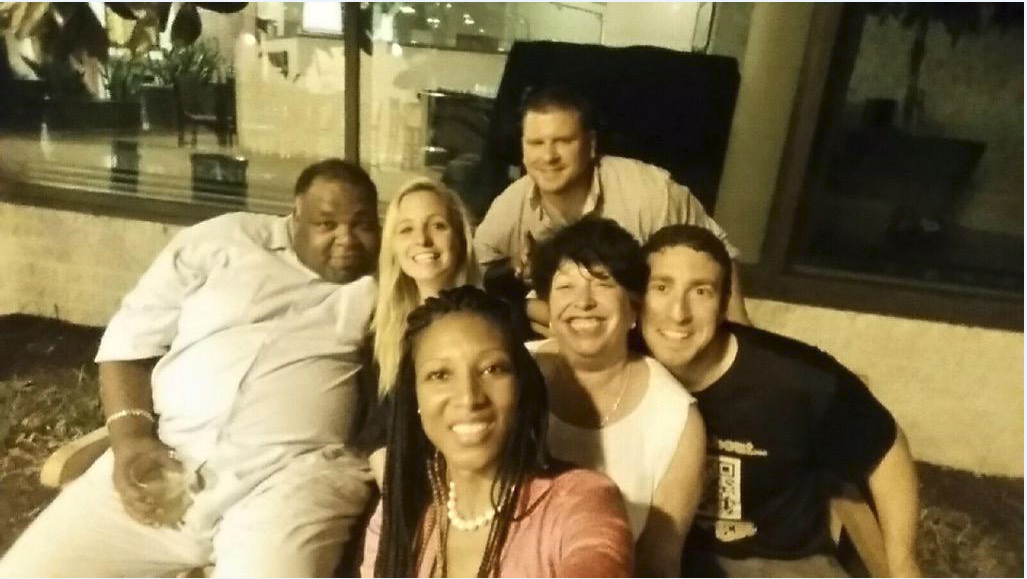
2015-09-20_2225The greatest takeaway of the entire experience was back at the hotel. I was able to really talk with Manan, Michelle, Dave, Lavonna, Barry and so many other leaders in a relaxed environment. We talked education, sang, and danced. It was wonderful to socialize with people who had the same excitement for education that I have. There was a special time during the night that I ended up outside on a park bench with Christine (@ccavallo2), John (@C0ACHSuk) Jarvay and some random ladies. Motown was rocking on the radio, tunes were belted out, and fun was had by all. What made this really special was our conversation with Jarvay. He was dropping knowledge on us and I was ready to catch it. His views were fresh and there was no sugar coating any of it. It was the perfect ending to a phenomenal night.

To wrap this blog/novel I would like to that the entire #njpaecet2 committee, the Bill and Melinda Gates Foundation, and every person who presented and attended the conference. I would highly encourage everyone to reach out to your PLN and find out how you can attend your local #ecet2 conference. You will make connections, raise your pedagogy, eat a ton, and have lots of fun while learning. Can you think of anything better than that?

Q1: What was your favorite part of #njpaecet2 ? #slowchatpe

Q2: What do you think needs to change at #njpaecet2 to improve it? #slowchatpe

Q3: What session blew your mind? Why? #njpaecet2 #slowchatpe

Q4: Who should present at next year’s #njpaecet2 #slowchatpe

Q5: Who should people be connected to that you met at #njpaecet2 ?

Finding Your Bliss

This month Dr. Will’s (@iamdrwill) blog challenge is FINDING YOUR BLISS. This is a great subject to think about for so many reasons. The first being what makes me happy? This should be a question that I have the response to right away. I do have responses but they seem so short lived in my mind. A chocolate peanut butter cup. Buffalo wings. Reading a book beside a body of water while sitting in the shade. A cold beverage keeping me hydrated. Basketball on Wednesday nights. These things all make me happy but do they really give me bliss?

I next did what any smart person would do. I looked up what is bliss.  According to the interwebs bliss is defined as: supreme happiness; utter joy or contentment. Do the above things give me bliss or just temporary happiness? Would I eat, drink, and read books forever if I won the lottery? Not a chance. So anything that is temporary really isn’t my bliss. My bliss has to make me feel like I am a part of something bigger than me.

My bliss falls into two categories. Family and kids. If I was filthy rich would I spend all my time and money with my family? Yes indeed. It would be fantastic to be afforded the time and opportunity to really enjoy my family for a large amount of time. I would attend every ball game, dance recital, chess match, spelling bee, Boy Scout meeting, and anything else my children wanted to do. I would take my wife to every restaurant and beach she wanted to visit. I would be living my bliss. Almost.

There is more to life than just my family. I couldn’t sit around and live my life only for my family. I need to make a dent in the world. Change it for the better. I need to be around kids. They keep me alive. They help me realize the world is a great place. Problems are only as big as you make them. A smile is only a joke away. Kids have a way of showing you how much you are needed in the world. They are my hope that something I do will have a lasting effect on the world. Kids bring out the joy in me.

Together my family and being around children are my bliss. Both give me the supreme happiness and utter joy that I crave in life. There is nothing better than to see my children growing up and learning to do things on their own. Their smiles melt my heart in a way I could never have imagined. Being married to someone who I can share the good and the bad of life makes every day just a little bit better. Watching my students learning new skills, laughing, exploring, and being excited to come to my class and be around me brings me great joy. Knowing that I am positively shaping their small world and starting a ripple effect that could change the larger outside world; bliss.

Q1: What is your bliss outside of school? Why? #slowchatpe

Q2: What is your bliss inside of school? Why? #slowchatpe

Q3: Do we ever ask our student’s what their bliss is? #slowchatpe

Q4: How can we connect our teaching with our students’ bliss? #slowchatpe

Q5: What are you doing to create more bliss in your life? #slowchatpe

Humanity before Ideology

I have been thinking about this post ever since I saw this picture.2015-09-06_1507It amazed me. The caption beneath the picture read, “South Carolina’s director of public safety, Leroy Smith, helps a man wearing a National Socialist Movement T-shirt up the stairs at Saturday’s rally after it appeared he was suffering from heat exhaustion.” I wondered would I do the same thing? Would I help someone out who hated me simply because of my DNA, my skin color, the family I was born into? Would I aid a person who despised me because I was different from them? Would I assist an individual whose entire being hated me through no fault of my own? I would hope the answer is yes. To be completely honest I don’t know what the truth would be.

What struck me as fantastically awesome about this picture was that the director of safety put humanity before his ideology. Mr. Smith did not allow his compassion to be snuffed out in the face of a racist. He did not allow the neo-Nazi racist ideology to obscure his empathy.

Humanity: Humaneness; benevolence.

“he praised them for their standards of humanity, care, and dignity”

synonyms: compassionbrotherly lovefraternity, fellow feelingphilanthropy, humaneness, kindnessconsideration, understandingsympathy,

tolerance; empathy

Idealogy: a system of ideas and ideals, especially one that forms the basis of economic or political theory and policy.

“the ideology of republicanism”

synonyms: beliefs, ideas, ideals, principles, ethics, morals; More

This year I placed my students into groups and had them look up the word empathy and role play one scenario that would display to the class what empathy looked like as well as the difference between empathy and sympathy.  I then paired my 4th, 5th, and 6th graders with someone who was different from them. The difference could be the gender they identified with, their skin color, height, weight or any other physical characteristic that separates us. I asked my students to look at their partner and notice every difference in physical appearance they could. Notice the difference between their hair, skin, cheekbones, nose and eyes. I then had them see the similarities between themselves and their partners. They were also directed to imagine how that person felt when someone made fun of them, was rude to them, or ostracized them. I hope that this exercise increased their empathy with their classmates. At the very least I was intentionally and explicitly teaching them what empathy was as well as how to grow their own empathy.

I have put my ideology before humanity many times on social media. (especially Twitter) I look at the words the person wrote and respond based on what I thought they meant. I did not think about who the people were and what they were really trying to say. I would pounce on them and didn’t care if I was in a sea of others that was jumping on that individual. Where was my humanity? How did I forget that there was a person on the other side of the screen that could be hurt and angered by what I said? Why didn’t I think about whom the person was and where they were coming from?

What makes this even crazier is that I have been on the receiving end of this before. I poke my nose (which is rather large) into all kinds of conversations on Twitter. I have had people tell me I think and speak these ways because of my white privilege. I have had what I had thought of as a compliment turned around on me. People have questioned my use of social media because I didn’t follow the norms that I didn’t know even existed. I promise you that I have never had malice or negativity in my heart during these conversations. I am sure that I am ignorant in many issues and areas and have been at fault numerous times for responding when I should have been just a lurker. What has happened in response to my constant curiosity is that I have received feedback that I belive has put people’s ideology in front of their humanity. I may be too sensitive in this assessment. It is something I have been struggling with for a while. Where does constructive criticism end and haters begin?

This makes me wonder if I have ever done that with my students before. Have I reacted to their behavior or responses strictly based on my ideology of how “good students” should respond or behave? Was I too harsh on a student because I perceived they weren’t working hard enough, cared enough, or thought they had an attitude? Have I put my beliefs in front of the fact that they were kids, students, someone’s children? I hope not but I have the sinking feeling I may have.

This year I am hoping that I can remember that everyone I interact with is a human. They are somebody who thinks feels, wants to be loved, and wants to be accepted for who they are. I have been really working on seeing people as much more than the physical shell they are temporarily using. They are more than what they think and how they act. They are people. This year I am going to put humanity in front of my ideology. I hope you are able to do the same.

Q1: Have you ever put your ideology before humanity? How did you rectify it?

Q2: What do you do to see people as humans and not who or what they look like?

Q3: How do you teach your students to see each other as people?

Q4: How do you forget the labels that have been placed on students by others?

Q5: What people or hashtags are based on humanity first and ideology second?

Toilets; The Great Connectors

My Four year old woke up from his nap today and declared, “I have to go to the bathroom.” I escorted him to the toilet which he promptly sat down on. I already knew what was going to come out of his mouth. Sure enough I heard, “Dad can you sit on the step stool so I can tell you a story?” This is a regular occurrence with him. I pulled the step stool across the tile floor and sat down incredulous that my life had taken me to a point that would have appalled me ten years ago. He proceeded to recite every line from the book Sleeping Beauty to me. I sat there with the fan on and looked at his angelic face and realized that the toilet was connecting us in a way that I had never thought possible. My phone was away and we were mere feet apart sharing a moment together.

My mind wandered off for a bit about how much I knew about the toilet. (I had heard Sleeping Beauty well over 100 times already) Did you know that Nov. 19 is World Toilet Day? It is an event hosted by the World Toilet Organization to raise awareness for the 2.5 billion people around the world who live without proper sanitation. The history of the toilet is quite fascinating. A Scottish settlement had drains that extended from their walls that historians believe could have been the first bathrooms in 3000 B.C. The Palace of Knossos on Crete, built around 1,700 B.C., features definite latrines.

We have to leap all the way to, “1596 when Sir John Harrington, godson of Elizabeth I, published Metamorphosis of Ajax, in which he described a new kind of water closet: a raised cistern with a small pipe down which water ran when released by a valve.” (Suddath 2009)  Two hundred years later, along came Alexander Cummings, who developed the S-shaped pipe underneath the basin that kept out foul odors.

“In the 1880s, England’s Prince Edward (later to become King Edward VII) hired a prominent London plumber named Thomas Crapper to construct lavatories in several royal palaces. While Crapper patented a number of bathroom-related inventions, he did not — as is often believed — actually invent the modern toilet. He was, however, the first one to display his bathroom wares in a showroom, so that when customers needed a new fixture, they would immediately think of his name.” (Suddath 2009) Today only 60% of the world’s population has access to proper sanitation.

Now that we know the history of the toilet I will revisit why the toilet is the great connector. Most people in America use a toilet. All of my students use toilets. I believe that everyone who has ever been in a room that I was facilitating professional development with uses a toilet. I realize that I use the toilet as a reference during my teaching to connect with my students an awful lot.

When I explain how to do a proper squat I tell the students to imagine they are sitting down on a toilet. We play a game called toilet tag where a frozen person gets on one knee with an arm out and other students unfreeze them by pushing down their arm simulating a toilet flushing. My students are encouraged to make toilet noises when they do jump squats as a warmup. The laughter and giggles that ensues makes me happy. The engagement of all my students makes me a happy teacher.

My health class is another arena where toilets come into play. In 3rd grade we discuss the digestive system.  Guess where solids and liquids end up after they have been digested? You guessed it. The toilet. In 4th grade we cover septic systems and sanitation plants. More toilet talk. I never have to redirect my students during these lessons. They are in to win it.

Whenever I talk to anyone over the age of 75 it seems that the conversation ends up talking about how they visit the toilet too often or aren’t able to get there enough. Both are problems that need to be discussed in detail by them whether you want to or not.

At Edcamp NJ last year I demonstrated my digestive system lesson to the group. It was a way to show how having students demonstrate the digestive system kinesthetically helped the lesson to stick. Guess what. 100% of my students scored a perfect score on the digestive system assessment. I can tell you @dougtimm34 and @btcostello won’t ever forget it. Ask Ross Lebrun about the lesson!

Next time you go somewhere and see a toilet reflect on the multiple ways that it can be used as a connection between people. Everyone uses them yet we are afraid to talk about them. If you want to relate to your students, your staff, your grandparents, or a stranger bring up a toilet. We all need to reflect about the toilet and appreciate it for more than just the most sanitary way to ship out human (or cats can be trained to use them to) waste. After all it is the Great Connector.

tumblr_mea6j8C18s1r3a6jho1_400_zps4ac3c0a9

Q1: What is the one topic that all your students can relate to? #slowchatpe

Q2: What topics are you uncomfortable discussing in class? Why? #slowchatpe

Q3: How do you stay relatable to your students? #slowchatpe

Q4: What activities do you do that others may raise an eyebrow but you know the ss learn and love? #slowchatpe

Q5: Who do you think are great connectors with their ss? Why? #slowchatpe

From Good to Great

Summer camp just ended. I get four days to relax. Scratch that. Four days to plan how I am going to attack this year. I have learned more about teaching, building relationships, the whole child, racism, SES, sexism, and drama than I have in the past 32 years of my life. Learning has been great but if I don’t put my knowledge to use than what good is it? This blog is my attempt to lay out what is important to me this year. If you don’t care what I have learned and what I plan to do with it I thank you for your time and bid you adieu.

My main goal is to have my students see each other with empathy. This will be a most difficult task for myself as well as my students. I want them to see each other as children, humans, and peers. I want to strip away the previous year’s labels of the nose picker, the dork, the athlete, the suck up, the violinist, the kid who peed their pants and any other labels they may have accumulated.  I will do this by using this site. Neila Steele (@neilasteele) also taught me a great idea about having students sit back to back and focus on each other’s breathing patterns. I will use this to create physical connections with the students. I am going to be purposeful in my delivery as well as my expectations for my students.

The second goal is vital to the success of me becoming a great teacher this year. My goal is to address social justice in my class. This TED Talk hammers home how important being color brave is versus being color blind. I use the sneetches as a lesson to my third graders about racism. I use this Frontline story about Jane Elliot to teach my 4th grade students. She was a teacher who knew she had to make an impact on her 3rd grade students’ views on racism. If you have never watched the videos it is earth shattering how easily hatred and bigotry rise from students. It is a great discussion starter for my students. This video shows my 6th graders how the color of a person’s skin changes the perception of their actions. I will continue to use these lessons and use the website tolerance.org for more resources. Hopefully these lessons will teach my students metacognition.

The next goal goes hand in hand with the second goal. I want to be intentional on who I choose to be the demonstrator of ideas, concepts, exercises, and anything else that is displayed for my class. I have always made sure that I chose girls as well as boys. I have also made sure that I chose students of all different races and ethnicities to go in front of the class. What I have not made sure to do was include outside resources that showed people of multiple races and genders as role models. When I show videos of soccer players executing moves I will be intentional that they will include all genders. If I show videos of the overhand throw I want students to see Mo’ne Davis throwing the ball. The key to this is I remain intentional about who I display to my students and why. I will be intentional and not allow the hidden curriculum to teach anything that goes against my philosophy.

My final goal will be to continue to improve my pedagogy. Jo Bailey ran a great session on solo taxonomy at the #peinstitute15. I have been reading up of teaching games for understanding. See Saw will be a great way for me to keep a sportfolio.  Class dojo is a great tool to communicate to the parents about their child’s behavior in my class. All these will be tools that I can use to increase my student’s learning.

There is so much change that I will be implementing this year due to the knowledge I have acquired at conferences and using social media. What will not change is the passion I for teaching or the relationships I have with my students. I am not reinventing the wheel this year. I have just upgraded the rim, purchased new rubber tire, and am using nitrogen instead of air. I have been a good teacher in the past. I now know how to be a great teacher. I will evolve into a teacher who not only teaches the content in a way that resonates with my students but allows the students to gain control of their learning. I will be teaching the curriculum as well as equity, social justice, and physical literacy. I refuse to see my students as physical education and health participants. I will see them as children who need to learn in a variety of ways about a variety of things.

Q1. What is the biggest change you will be undergoing in the classroom this year? #slowchatpe

Q2. How will you encourage and support your ss empathy? #slowchatpe

Q3. How are you able to connect the outside world into your classroom? #slowchatpe

Q4. What is your role in teaching your students about social justice and equity? #slowchatpe

Q5. Who will be checking on you to make sure you are hitting your goals this year? #slowchatpe

Good to Great

What the What???? WTW

The perils of “Growth Mindset” education: Why we’re trying to fix our kids when we should be fixing the system

 (authored by Alfie Kohn)

This article resonated with me this week written by Alfie Kohn. Please read it. I read the whole article and kept waiting for the part that showed growth mindset is a danger. His article is based on the premise that this popular educational idea is a threat to students:

“Kids tend to fare better when they regard intelligence and other abilities not as fixed traits that they either have or lack, but as attributes that can be improved through effort.” (growth mindset)

Mr. Kohn starts the article getting everyone to agree that poor pedagogy is a problem. I am fully in support that facts being crammed down students’ throats, lack of student voice, lack of student choice, and ignorance of project based learning are not great teaching practices. I am still looking for a valid argument why growth mindset is a problem.

Mr. Kohn supports that the growth mindset is indeed research based and backed up with facts. “Dweck’s basic thesis is supported by decades’ worth of good data. It’s not just the habit of attributing your failure to being stupid that holds you back, but also the habit of attributing your success to being smart. Regardless of their track record, kids tend to do better in the future if they believe that how well they did in the past was primarily a result of effort.” This did not convince me that the growth mindset is a risk to students. It further convinced me Dweck is onto something here.

His next statement is where his failure to separate growth mindset, which he uses its previous label of incremental theory, is where the problem originates. “But books, articles, TED talks, and teacher-training sessions devoted to the wonders of adopting a growth mindset rarely bother to ask whether the curriculum is meaningful, whether the pedagogy is thoughtful, or whether the assessment of students’ learning is authentic (as opposed to defining success merely as higher scores on dreadful standardized tests).” Why would they? Their job is to analyze how students behave not the rigor and effectiveness of the curriculum and pedagogy.

When you lump poor pedagogy, ineffective school policy, and the growth mindset together two out of the three are clearly wrong.  Change the pedagogy and ineffective school policy. Do not throw growth mindset in there and label it part of the problem. Alfie Kohn further mangles the growth mindset issue by drawing in the anti-test crowd. What does testing have to do with teaching growth mindset? They are two separate issues. Even if testing and growth mindset were hand in hand testing is only one part of the child. Growth mindset looks at the whole child and how they are able to reflect back on what happened and use that information to positively impact the future.

Kohn goes on with rhetoric such as this: “Small wonder that this idea goes down so easily. All we have to do is get kids to adopt the right attitude, to think optimistically about their ability to handle whatever they’ve been given to do. Even if, quite frankly, it’s not worth doing.” If something is not worth doing it is the job of the administration and teachers to change that assignment. This still does not illustrate how the growth mindset contributes to this problem. Change the system keep the mindset so far is my opinion.

This next statement boggled my mind. “The more serious concern, however, is that what’s really problematic is praise itself. It’s a verbal reward, an extrinsic inducement, and, like other rewards, is often construed by the recipient as manipulation. A substantial research literature has shown that the kids typically end up less interested in whatever they were rewarded or praised for doing, because now their goal is just to get the reward or praise.” I see a problem with extrinsic rewards such as praise but that is not a growth mindset. The teacher that was modeling a growth mindset wouldn’t say, “Great job working on that project Johnny.” They would state, “I noticed you were working hard on that project.” That praise is placed in a way that values the intrinsic trait of work ethic not the extrinsic praise of the project looking nice.

Mr. Kohn gives some conflicting evidence for his claim that, “A 2010 study found that when students whose self-worth hinges on their performance face the prospect of failure, it doesn’t help for them to adopt a growth mindset. In fact, those who did so were even more likely to give themselves an excuse for screwing up — a strategy known as “self-handicapping” — as compared to those with the dreaded fixed mindset.”  The article he cited stated that “People who hold incremental theories of intelligence (growth mindset), however, tend to exhibit more adaptive academic behaviors and report a diminished tendency to self-handicap. (Ommundsen, 2001; Rhodewalt, 1994).”

The study did try to prove that growth mindset was a problem. They came up with these results:

“When highly contingent incremental students fail without prior practice, poor performance does not reflect lack of ability, as they have a valid external excuse for failure and a path to future improvement. However, when they fail despite practice, they no longer have an external excuse for their poor performance. Therefore, they attribute failure to lack of ability and consequently experience lower self-esteem.” (Niiya, Brook, & Crocker 2010)

Read that again. When you fail and didn’t study or weren’t giving the opportunity to practice you placed the blame outside of yourself. The study states that is valid. I agree. The next sentence states that when they failed after they practiced they felt worse about themselves. I agree again. What does that have to do with growth mindset? Wouldn’t you be upset if you studied and didn’t get the desired result? A fixed mindset blames the test or outside sources when they become upset. A growth mindset reflects on why they didn’t succeed and tries to figure out how to succeed. I am still not convinced that growth mindset is the problem here after dissecting this study.

Alfie Kohn ends with this proclamation:

“And this brings us to the biggest blind spot of all — the whole idea of focusing on the mindsets of individuals. Dweck’s work nestles comfortably in a long self-help tradition, the American can-do, just-adopt-a-positive-attitude spirit.(“I think I can, I think I can…”) The message of that tradition has always been to adjust yourself to conditions as you find them because those conditions are immutable; all you can do is decide on the spirit in which to approach them. Ironically, the more we occupy ourselves with getting kids to attribute outcomes to their own effort, the more we communicate that the conditions they face are, well, fixed.”

That was sneaky right there. You took a conversation about mindset and threw in the whole politics, conditions of the world, racism, classism, sexism, and every other outside problem that is wrong with education and the world. Do every one of those problems exist in the world? Darn straight. Does that mean we shouldn’t be teaching growth mindset? Not a chance. We have to teach that working hard and not giving up are important. We also need to teach that there are major problems in the world that may affect you because of your race, gender, or ethnicity. That does not negate the need for students to understand that when they work hard they will get smarter and better at something. The amount may vary. Other people will tell them it was good enough or not good enough. Their job is to keep in mind that, “intelligence and other abilities not as fixed traits that they either have or lack, but as attributes that can be improved through effort.”

Mr. Alfie Kohn you make a great argument for why the school system needs major overhauls. You brought up problems with standardized testing, extrinsic rewards, poor pedagogy, weak administration and many more things that education needs to identify and change. What you did not do is convince me in any way shape or form that having a growth mindset is a “peril” and that “we’re trying to fix our kids when we should be fixing the system”. I don’t believe that growth mindset proponents feel that it is the answer to all of education’s problems. They believe that it is a great way to live life. Fix the teaching, the administration, the school, the politics, and everything else that troubles education. Leave the one trend that is actually making a positive impact on students long after school matters to our students.

http://www.salon.com/2015/08/16/the_education_fad_thats_hurting_our_kids_what_you_need_to_know_about_growth_mindset_theory_and_the_harmful_lessons_it_imparts/

Niiya, Y., Brook, A., & Crocker, J. (n.d.). Contingent Self-worth and Self-handicapping: Do Incremental Theorists Protect Self-esteem? Self and Identity, 276-297.

Q1. What does the growth mindset mean to you? #slowchatpe

Q2. How do you students engage in self-handicapping? #slowchatpe

Q3. What problems does you see with the growth mindset movement? #slowchatpe

Q4. How do you teach growth mindset to your students?

Q5. What educators on social media display a growth mindset?

I’m a Hustler Baby I Just Want You to Know

I’m a hustler baby, I’m a hustler
I just want you to know, wanna let you know
It aint where I been, it aint where I been
But where I’m bout to go, top of the world!

This week my blog is dedicated to the Dr. Will show. I love this man because his energy is infectious and his brain is moving faster than mine ever will. This month he switched up his blogging challenge and threw out two ideas. The first one was interesting because it dealt all about how we dress. This is a great topic that is definitely blog worthy. However, it did not grab my attention like his second choice.

The second blog idea he threw out was finding your hustle.  This resonated with me on a personal and professional level. I have been working since I was 10 years old. I had a newspaper route that netted over $150 a month. This was a boatload of money when I was a child. My bike had all the bells and whistles and I always had money to order food after a day of romping through the town.

The ability to make and spend money on my own has followed me through the years. My high school years were spent playing sports and working at an Italian restaurant. The lessons I learned at the restaurant were certainly journal worthy. I learned every aspect of the business as well as how to interact with people. There were workers from various countries that all wanted to laugh and mess with you. This experience allowed me to find humor at work and realize that you can work hard and have fun at the same time.

My college years were some of the hardest working years I ever had. I worked at a liquor store, summer camps, and a night club. The money rolled in and payed for my car, insurance, cell phone, apartment, books, and nights out on the town. Summers were brutal. I was working 60-80 hour weeks while my friends were partying at the shore. My long hours certainly helped keep me out of trouble and allowed me to interact with all types of people. All the jobs were hard work but I was able to have fun at them as well. This reinforced to me that no matter where you were or what you were doing you could enjoy yourself and make the best of any situation you were in.

Once I started teaching I thought I would be on easy street. I was wrong. I continued to teach, work at the liquor store, and bartend. The bills were getting paid and I was keeping my head above the water. Little did I know the real hustle was just beginning!

My wife and I enjoyed the birth of three children in four years. During this same time I completed two masters’ degrees. My hustle was going strong. I have never been so doggone tired in all my life. It felt like my past jobs were cake compared to parenting, teaching, working at the liquor store, and bartending. My hustle was on and the direction my life was going was making me extremely happy, but I did not feel that I was changing the world. I needed a kick start to my life.

Social media took ahold of my life. Passion and exuberance abounded everywhere. Motivational quotes floated around everywhere I looked. These people got it. The first few months were great. My soul was alive and fired up. Then without me fully understanding it the bubble popped. Group think was the norm rather than the exception. Everyone was back slapping and saying how great they were. I needed more. I needed to help change the world. I was tired of consuming and wanted to start producing. Then it happened.

The #physed community was blowing up on Voxer and new projects were being organically formed right before my eyes. I had finally found my hustle. Something I was passionate about and would do for free. (much like the Dr. Will show) I was going to create free projects that would help pick up the #physed world as well as the rest of education. The biggest hustle and project that I collaborated on is the National Lesson Plan Creator. Eight physical education teachers used social media to create the greatest lesson plan creator in the history of physical education and we were able to offer it for free. We worked well over 200 man hours and received $0 for our work. We hustled because we wanted to create something that would change the world.

Nicholas Endlich (@nicholasendlich) Adam Llevo (@mradampe) and I created two projects for teachers that we felt were needed in the physical education and education world. If you would like to see our balancing project or our student workout videos click here. Those two projects took at ton of time and effort. We offer it to anyone in education to use for free. Our hustle, our passion, is lifting up the entire profession of physical education.

My hustling doesn’t stop there though. I blog every Sunday. This blog is the jump off for #slowchatpe on Twitter. The blog allows me to refine my thoughts.  The Twitter chat was much needed at the time. There were only a couple of chats that related to #physed. The chat allows an arena for all educators as well as physical educators to come together and discuss real issues in education. Some weeks are geared more towards the physical education crowd and others toward all educators.  This could be my most passionate hustle. I pour my heart and soul into the blog and Twitter chat. The chat is not just people telling each other how great they are. It really tries to delve deeper into subjects and make people defend their position as well as reflect on their teaching. I know this has definitely done this for me.

My final hustle is a podcast called the Voxcast.  The Voxcast is a podcast that is created on the Voxer application and is now being sponsored by SPARK!  Jorge Rodriguez (@physednow) is the brains behind the operation. We interview educators across the spectrum. The idea behind the podcast is to figure out how typical teachers can improve their pedagogy. Everyone has a story and something great to share with the world. The Voxcast is set up to discover what that is.

As I reflect on my hustle it has occurred to me that I am getting closer to my goal of changing the world. I have found a group of people who are willing to join my hustle and become producers. My question for you is what are you doing to better our profession?

Q1. What is your hustle? What passion are you pursuing? #slowchatpe

Q2. How does your hustle contribute to your life? #slowchatpe

Q3. What was the hardest project outside of college you ever worked on? #slowchatpe

Q4. Are you a consumer or producer? Why? #slowchatpe

Q5. Who’s side hustle should we know about? Who is lighting the world on fire? #slowchatpe

#PEINSTITUTE2015 Reflection

IMG_1786

This weeks blog post is a reflection of the #peinstitute2015. Going into the conference I was hyped up. The great Adam Llevo (@mradampe) was flying in from Saudi Arabia. I was going to pick him up at the train station and together we would drive 2 hours to Pennsylvania to pick up the notorious Nicholas Endlich (@nicholasendlich). This would start a 10 hour epic road trip that started at midnight and ended at ten in the morning. Adam slept through most of the night while Nick and I played comedy bits and our favorite songs from our library. We struggled through the night and arrived tired but full of adrenaline.

Check in did not occur until 2 pm. so we picked up the naturalized U.S. citizen Jo Bailey, and headed to Ashville for breakfast. I wanted to taste authentic Asheville cuisine so I asked the waitress to order me the best thing on the menu. She came out with fried chicken and pancakes!  What a deliciously unhealthy meal to eat for breakfast. We sampled the local beverages at another establishment where Jo Bailey saw firsthand how Baggo should be played before heading back to the hotel.

Upon returning back to the hotel we went straight to the high ropes course. I started on fire. There were no obstacles holding me back. I clipped myself in and bolted as fast as I could. The course was no match for me. I quickly distanced myself from the rest of the group and was the king of the course. Then came the platform of doom. The platform was over 200 feet in the air. (ok maybe 30 feet but it felt like 200) I was frozen for 20 minutes unable to summon the courage to jump. Jo Bailey caught up to me and talked me down. She even offered to go first!! My ego wouldn’t let that happen. I would rather have two broken legs than let her go first! With Jo’s assurance and my ego I finally jumped off the ledge. The anticlimactic nature of being gently lowered to the ground was amazing! I finished the course making a complete fool of myself and having the time of my life! Check out the videos below:

Sleep finally conquered me and I woke up the next day ready to learn. Jarrod Robinson (@mrrobbo) was the opening keynote to the conference. He spoke about the power to connect and mentioned Adam, Nick, and I. What an honor it was to be in the opening keynote! Check out his slide share here. His speech was a curveball for many because it wasn’t all about tech. This was brilliant because tech is only one aspect of teaching physical education. His speech centered around 7 super powers of a great teacher. They were connection, reflection, mobile, video, outsourcing, learning, and sharing. Each one of these areas are so important for a teacher to consider when improving their pedagogy.

The next three days flew by and the learning never ceased. Wednesday came quickly and it was time for our presentation that Nick, Adam, and I had planned. The session started off super rocky. Our tech expert was flailing and things were not looking great. The room was packed and the temperature was rising from the massive amount of heat that was being generated. I was sweating profusely and was happy with my choice of headband attire. Everything finally worked and our session was off and running. We presented plickers, NLPC.US, Soyouthinkyoucanbalance, Soyouthinkyouarefit, padlet, Team Shake, and Nearpod (click nearpod link for our presentation). The feedback we received was amazing. I believe we helped some teachers with tools that will enhance their teaching. This will in turn enable students to learn better which will in turn help change the world. (this is my parade don’t rain on it)

I will leave you with my hits and misses from the #peninstitute2015. Keep the conversation going on the blog or #peinstitute2015

Hit: Jarrod Robinsons keynote avoiding just tech in physical education.

Miss: Lack of racial diversity of the keynotes in 2015 and 2016.

Hit: The diversity of the attendees. (gender, race, origin of country)

Hit: The wifi once it was rolling.

Miss: Most presenters and keynotes making people sit for 45 minutes at a physical education conference (practice what we preach?)

Hit: Hidden curriculum teaches our students via Dr. Ash Casey. Pay attention to what we aren’t saying or doing as much as what we are saying or doing.

Hit: Provocations. Tying our content to the emotional and empathetic side our students via Andy Vasily.

Hit: Free coffee at the conference center.

Hit: The basketball game on Tuesday.

Hit: Tons of free resources given out.

Hit: UBD emphasis propogated by Joey Feith.

Miss: The audio at the conference.

Hit: The dj at the hotel

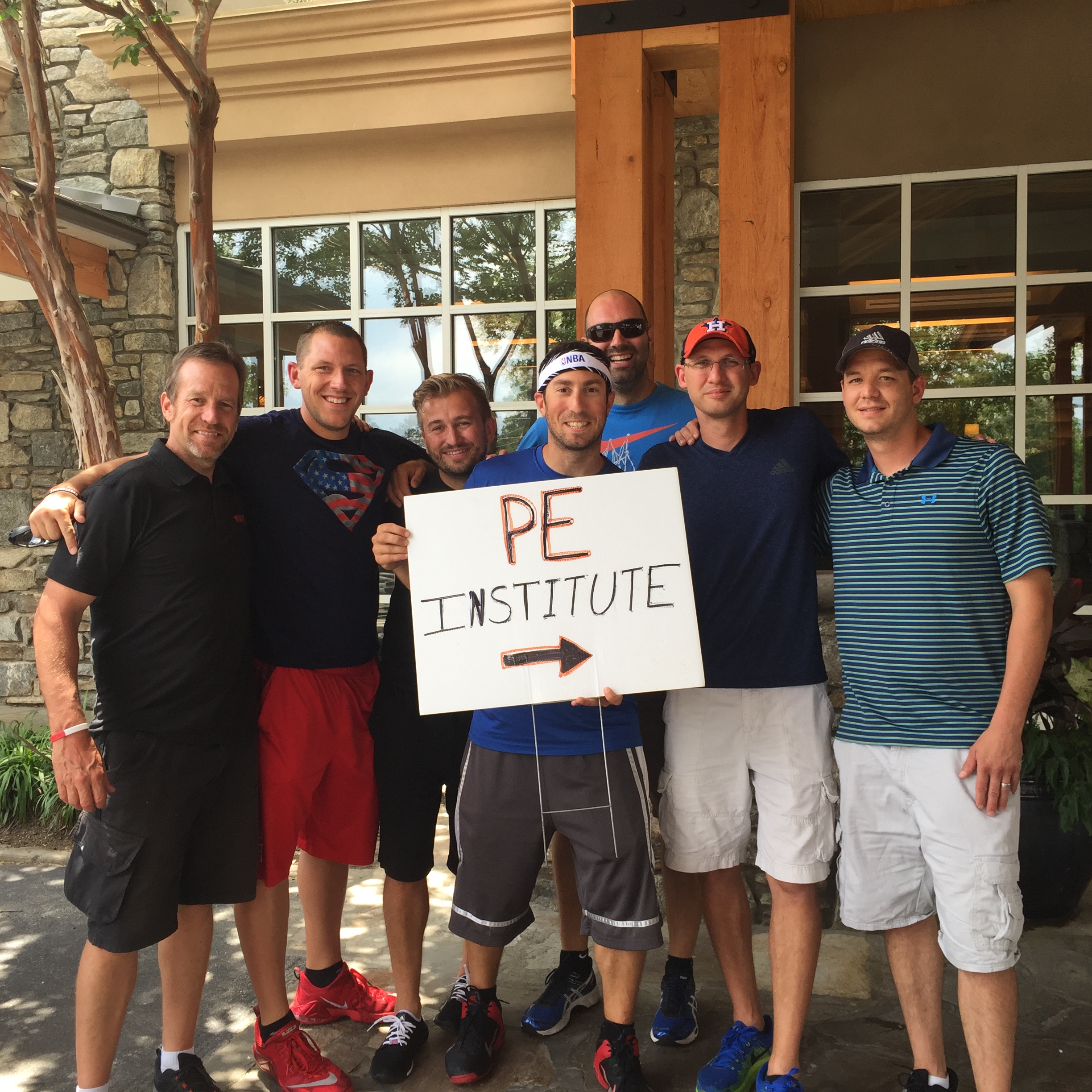
Hit: The Pe Institute signs that saved the attendees money.

I left the conference feeling closer to people than ever before. My Voxer and Twitter PLN was super strong! It was great meeting the people face to face who I am in contact with all the time via social media. I highly encourage you to attend this conference whether you teach physical education or not. The passion and dedication to learning was second to none!

Q1: What is the greatest takeaway from a recent conference you have attended #slowchatpe

Q2: Do you feel that conferences are worth the time and money? Why or why not? #slowchatpe

Q3: How do we get more presenters and keynotes of racial and ethnic diversity? #slowchatpe

Q4: How do you keep the flame lit after conferences you attend? #slowchatpe

Q5: Who is someone you heard speak or present at a conference that others should know about? #slowchatpe

IS THERE A WAY TO GET MORE EDUCATED CONNECTED?

IS THERE A WAY TO GET MORE EDUCATED CONNECTED?

This week #slowchatpe is being taken over by Brian Costello (@btcostello) I have been lucky enough to present with Brian at two different edcamps and consider him an integral part of my PLN. He is part heart, part philosopher, part dissident, anti homework, and pro thinker. If you don’t know him you need to follow him and allow him to brighten your life as well as challenge your thinking.  I thought so much of his original blog for CUE that I clamored for him to write a follow up blog for #slowchatpe. I am going to post his original blog here and his follow up blog below. I hope you are ready to think!  
This original blog was posted on the CUE blogsite http://blog.cue.org/connectededucatorclothes/.  

The Connected Educator’s New Clothes

Emperor's New ClothesFor over a year I have been excited about being a connected educator. I frequently lose myself in conversations, blog posts, and chats that speak to my diverse interests. As someone who enjoys consuming information and having intellectual discussions, the connections I have made are energizing and valuable. When I first started to connect with others I wanted to share this incredible resource with the world. Like most who get over-excited about sharing a new passion, I went ahead full force. I shared what I was learning with everyone the way the proud emperor displayed his new clothes. Unfortunately, people refused to see the beauty of my “new clothes” of connected learning. After a few weeks I had failed to inspire anyone to try on my connected educator’s new clothing. People were sure I was crazy, but they allowed me to continue my charade and strut around in my birthday suit of connectedness.

Since then I have seen how I cloaked myself similarly to the emperor. I knew better, and everyone else simply did not have the intelligence or foresight to realize the brilliance of being connected. I was wrapped up in how much I was learning and how it was helping to inspire more meaningful, engaging learning in my classroom. I looked at others with a contempt from on high. I, the great, learned, connected educator knew better than those Others. To this day I reflect upon my original experiences and see the foolish emperor.

Connecting means sharing, learning, reflecting, and collaborating. Truly being a connected educator means developing relationships with other people who can help us become better as either educators or as people in general. The more teachers we can get to share and learn from, the stronger education becomes.

There is a movement to expand the isolated pockets of connected educators. Even as the numbers of educators developing meaningful professional relationships outside of their schools expands, connected educators are still the minority. Many of education’s thought leaders, those that are shaping the future of our profession, are connected. Despite seeing more administrators, more teacher leaders, and nearly every major presenter in education as part of the connected educator network, the average educator is still not involved. To the average person in the classroom, the emperor is just a crazy man without clothes. Expanding the small, often clustered collection of educators that can be called connected is, in theory, an amazing movement for education.

Theoretically this is a no brainer.

The problem lies in our definitions of connected, our preconceived notions of teachers that are and are not connected, and the language we use when we talk about other educators. If we use the above definition of connecting, then we ought to push teachers to be connected. Most of us started connecting so that we could learn and improve for our students and ourselves. We sought individuals that pushed our thinking and challenged us to improve.

While we consistently hear the concept that “we are all equals here with equal voices”, many connected educators are discounting the voices of those that are not connected. Like I did, I see many connected educators creating a division between themselves and “the others”. There are statements about “them” that are derogatory and insulting. In case after case we forget that “them” refers to the dedicated teacher down the hall or the principal who has an incredible relationship with staff and students. Somewhere along the line the collective We of educational twitter users decided that Connected meant better, that Not Connected meant stagnant and closed-minded. It sometimes seems that not being on twitter is akin to not caring about your students or your profession.

With this approach, we alienate ourselves from the people we are trying to inspire. If our goal is to improve educators and develop connections among ourselves in the name of helping kids, we are heading down a wayward path. By labeling Others, we start with the preconception that they are already less than ourselves. When we help develop fellow educators’ access to the information, the resources, and the value of connection, they will find what type of connection works for them.

We should be clear that Connected does not necessarily mean “uses twitter.” If being connected actually means that we share, collaborate, learn and reflect through building relationships with others, then it leaves lots of room for choice. Yes, educators can connect through Twitter, but Voxer, Slack, Periscope, live podcasts, Google Hangouts, blogging, Instagram, Pinterest, face to face, and even Facebook, Google Plus and LinkedIn are viable options. I learn from being connected, not to an app or device, but to a vast collection of people who have a greater collection of knowledge and experiences than my own.

Connected EducatorsThe term “connected educator” is not then a bivalent description, but one that extends along a continuum that allows for learning and improvement on an individual basis. One way is not necessarily superior to another, it is the learning and improving that matter, not the format. We cannot brazenly strut about with the belief that if other people don’t see what we want them to, that they are beneath us. We cannot pretend to be wearing ornate robes.

There is a difference between the Connected Educator and the Emperor– everyone can see our new clothes. The truth is, most of us have developed an amazing wardrobe. It is up to all of us to do more than just show them off, but to find as many possible ways to let others tailor their own. We ought to promote connecting, but we ought to do it in a way that is open, allows people to use their strengths, learn from one another, and forge greater opportunities for education.

His follow up blog:
Standard

For the better part of a year, I have strongly believed that we should endeavor to get as many teachers connected(in some way) as possible.  Doing this is important, and here is why:

To me, being connected means we share, collaborate, learn, and reflect through the relationships we have built.  We take all of the wonderful support and resources that are readily at our disposal and we find ways to transform them into better learning opportunities for our kids.  By engaging in and developing those relationships, we make ourselves both better educators and better people.  Being connected is this incredible revelation for myself and many others which I have at times compared to being unplugged from the Matrix.

So many of education’s thought leaders are readily available for us to question, learn with, and grow alongside.  Why is it, that the average teacher/administrator  is not a part of this?  What keeps them from being connected?

When I first became a connected educator I found myself relentlessly eager to spread the word.  I had seen the light and soon I would help save others!  I have learned much since those days.  I recently shared that story and my reflections on what I see as a divisive attempt to push connectedness with CUE.  What I was left with at the end of my musings was an important question:

How do we expand the pockets of connected educators?  How do we reach those that have not “seen the light”?  

The truth is, I am not sure.  I am hoping to draw on the wealth of knowledge from intelligent, creative people.  I am looking for answers, and not the kind that come from the stockpile.  The reality is, we are very much the minority in education.

We are the few, making decisions and setting trends for the many.  I want the voices of the many, and I want new ways to engage them.  I am no longer content to be a candle, burning brightly in the dark (admitting I stole that phrase from a favorite Sci-Fi novel: Spinward Fringe).

This week Justin Schleider has been kind enough to lend me his platform of #SlowChatPE to discuss this important topic.  Please be prepared to come up with your best ideas, even if they are only ideas.  Those of you that have been in chats I have moderated know I will not take a canned answer.  Be ready to expand, to think, to have me push back the way many often do.  Here are this week’s questions.  Please take time to think and share.  Finding ways to get more educators to share, collaborate, learn, and grow should be of paramount importance to education leaders everywhere.

Monday: Q1- How did you find the right way for you to be connected?

Tuesday: Q2- How does being connected translate into better teaching and learning in your classroom/school?  Give specific examples.

Wednesday: Q3- “Show them” is ALWAYS the answer: How have you used being connected to help someone else improve their classroom?

Thursday: Q4- How can being a connected educator have negative effects on your teaching?

Friday: Q5- What can we gain from being connected to people outside education?