Eat Your Vegetables Children

Last week we started a new unit that I had never tried before. I am sure that somewhere someone has been doing this and I have stolen it from them. To that person, I apologize.

I introduced this game on the basketball court. The court was divided into thirds. On each third, there were four students. On the first third the blue team was on offense and the shirts were on defense. In the middle third, both teams were receiving the ball and progressing it to their offensive players. On the final third the shirts were offense and the blue team was the defense. There were two basketballs in play at one time. If the ball went out of bounds or a basket was made the defense in that third retrieved the ball and used the rules of basketball to progress it to the middle zone.

The defense could steal a pass or a dribble but couldn’t take the ball out of the opposing team’s hands. The rest of the rules of basketball were loosely adhered to.

This blog is not about the game though. (Although you def should play it!) The students didn’t want to play the game at first. I heard the classic, “why we can’t we just play basketball?” In which my response always is that they should sign up for a league and play there. It is a beautiful reminder that this is not a sports class. (nor is it a fitness class)

Some students hated basketball and experienced trepidation going into the game. The beauty of this particular game is that I split the groups up so that the person guarding them was close to their ability level. They had as fair of a matchup as I could possibly make it. The small-sided approach guaranteed they would get the ball and that they would have numerous chances to shoot the ball unaccosted.

I love basketball because it is a game where there is a lot of success. The ball goes in the hoop a lot. This makes the students feel good. That reward and the hit of dopamine released when the ball goes in does wonders for students who don’t always experience sports success.

The kids looooved the game! Once everything was rolling on both courts I was able to give tons of feedback as I vacillated between groups.

I am always pushing for student-centered games with student voice and choice that I sometimes forget that I am still the most experienced person in my class. I have taught thousands of students and can almost forecast the successes and failures that will occur. I am not discounting what the students think and want to do; however, sometimes they just have to do things that they may not want to because at the end of the day we as educators have a duty to guide them. This means we have to make some decisions they won’t like. Like I tell my own kids when they don’t want to eat their vegetables. “You don’t have to like it you just have to do it.”

I am not advocating for a dictatorship where it’s my way or the high way. The opposite of this is true as well though. The students don’t always know what is best either. While I place little stock in degrees and certfications I do place a high value on experience. Too often we as teachers don’t give ourselves enough credit for the knowledge that we have amassed over the years.

The education trends come and go. People with two years of experience are keynoting education conferences and have written manuals on how to teach. It’s time we started trusting ourselves again. As Aishwarya Rai Bachchan stated, “The more you are blessed with experience, the fuller and the more enriched you are in your craft.”

EdCamp Trauma-Informed Care

Last Saturday Lynne Traina and Jay Billy organized EdCamp Trauma-Informed Care. I was super interested in attending because I know little to nothing about this subject. To prepare myself and those who knew nothing about Trauma-Informed Care I asked Alex Shevrin Venet where I should start off if I wanted to learn. Alex sent me this link which was absolute gold! It had everything I needed to facilitate Trauma-Informed Care for Dummies! The conversations were fantastic!!

Specifically, this video by Jacob Ham is a fantastic way to learn and understand why it is so important that we understand what our students who are experiencing trauma brain is doing. This image really stuck out for me. The calf is only able to play so freely because it knows they are safe and secure with all the elephants protecting it. elephant

The second session was facilitated by a parent in the district. The basic premise was how can parents establish relationships with the staff and advocate for their child without becoming shut out or looked at as a “problem parent”. We talked about how teachers have to balance the idea of not putting too much of themselves out there where a parent can use what they say or do against while simultaneously keeping their heart open to doing what is best for that child and their family. I know from personal experience that parents can turn on teachers and one day you are the best thing since the remote control and the next day you are the worst thing next to nuclear waste. Regardless of how many times I have been burnt I will still keep my heart and class open. It is not fair to the other parents that I bring the baggage from past experiences and lay it on them. Parents do have to understand though why teachers are guarded. Our livelihoods are important to us and our families as well. We can’t just start over in another district without financial and social repercussions. It is a balancing act for sure.

That session had lots of tears and a very open and honest conversations. One other idea that came up is the “bubble child”.  These children aren’t classified and aren’t high flyers. They may end up slipping through the cracks if we are not careful. Amanda Fry also brought up a great point that I & RS can still help students that aren’t classified. This is something that both parents and teachers should keep in mind.

The final session I attended was titled, “Should Race Be an Aces Score?”. All day race and Trauma-Informed Care seemed separated. The question of the session was can white teachers use Trauma-Informed Care if they are not actively working to be anti-racist. While the conversation was slightly male-dominated it was still extraordinary. We discussed everything from how to right the system to what can we do tomorrow to change things. In short, you can not say you use Trauma-Informed Care if you are actively harming the students in your classroom. This means we need to understand the history of the country and that it was built and continues to operate within a racist system. Here is a great article that explains more about historical Trauma and its’ impact that is felt today.

The day was a major success for me. I knew nothing and left knowing more than nothing. Thanks to Jay Billy, Lynne Traina, and the Lawrence Township School District for hosting the conference. I have so much more to learn about Trauma-Informed Care and I am confident I have found the right people to learn with and from.

Flocabulary Rapped Me Up

Flocabulary is legit. You can stop reading the blog now and figure out how to purchase a license for yourself. If my affirmation alone doesn’t convince you then I will attempt to persuade you by explaining just what it offers.

At its’ core, “Flocabulary is a learning program for all grades that uses educational hip-hop music to engage students and increase achievement across the curriculum.” The music and the knowledge that it transmits are worth their weight in gold. The kids watch, rapt.

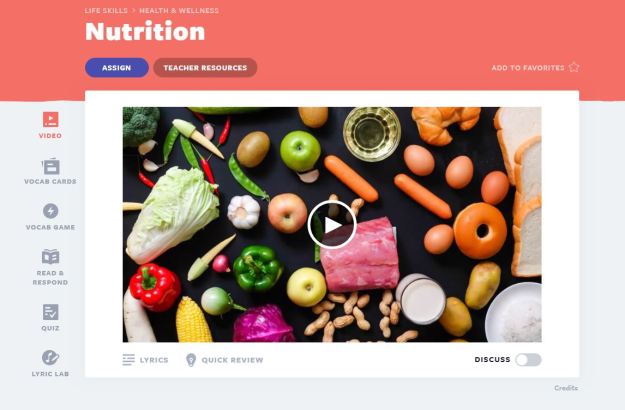
It is so much more though. When you log in you can choose to play the video, use the vocab cards, play a vocab game, read & respond, quiz, or create your own lyrics using the vocab words. Capture

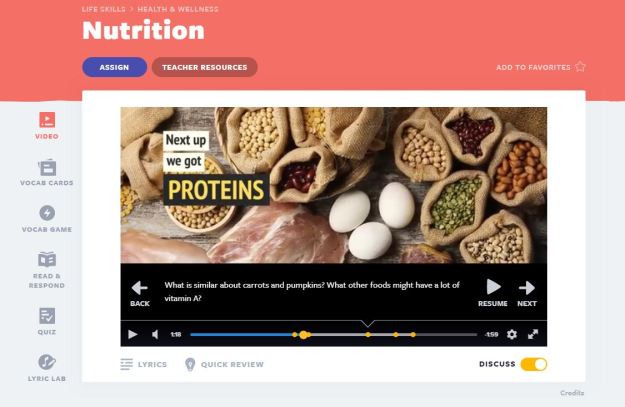
One of the features I love is how you can click the discuss tab on the bottom right of the videos and questions come up just like they would in EdPuzzle. Capture

The vocab words cards are filled with colorful pictures that really grab the students’ attention.

The vocab game is a cool click and drag game that reinforces what we have discussed in class. Capture

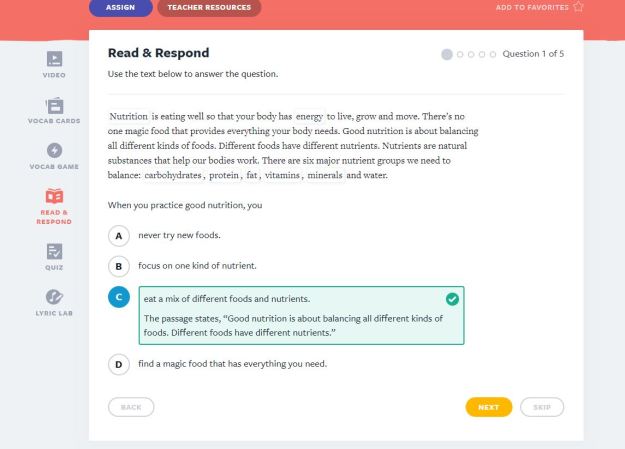
The literacy component of reading and responding helps me infuse literacy into my health class as well.

Capture

This quiz is a quick formative way to get some data to assess where the class should be directed next. Capture 1.JPG

The lyric lab may be the coolest part of this!! You can choose various beats as well as the vocab words of the lesson. The students can voice over the beats. The program also gives you rhymes for the vocab words. Capture 2.JPG

In conclusion, I usually am not a super geeky tech tool blogger but Flocabulary is a really cool tool to have in your belt as a health teacher.


Immediacy of Action

Last week I received this email:

Hi Justin, hope all is going well for you.  I’m — one of the OT’s at LIS.  I was wondering if you have a few minutes if you could stop by to talk to me about a student in Mrs. —– class.  I’m in room — all day today.

When I get an email from a colleague like this I like to go find out what is going on right away. I immediately went to speak to her. To make a long story short one of the students was upset about something from my class when they went down to her class. After a quick conversation about the student, I left her office.

I had a decision to make. I could go on back to my office and continue to try to get everything set up for the year and keep my head above water, or I could go and make sure that the relationship between the student and I was not frayed.

You can probably guess from the title that I walked down to the student’s class and asked their teacher if I could speak with the child quickly. The teacher agreed and I was able to speak with the student in the hallway. I had a pretty good relationship with the student and I asked them if I could put my arm around them as we walked and talked down the highway. They responded yes and we spoke about why they had been upset. Once I made sure the relationship was repaired and the incident was addressed we walked back to class together.

A couple of thoughts occurred to me about this situation. I could have first repaired this relationship sooner. I can give you multiple reasons why I didn’t; however, what I need to remember is you can’t move on to the next task until the prior one is finished. This means that I may have a slightly agitated teacher who lost a couple minutes of prep or was slightly late to a meeting because I refused to leave relationships frayed.

The second thought was that it was amazing that the OT took the time to email me and make sure that both the student and I were able to repair our relationships.

Finally, I am glad that the day did not end before I was able to address this situation. Issues no matter how big or small are best dealt with as soon as possible. This was a minor issue to me but obviously bigger to the child.

If you take away anything from this blog it is that relationships are more important than content. Next time there is a conflict in your class, especially as a Physical Education teacher, find a place and a time to find the student and address it. It can be a simple question such as, “We good?”.

I am sure most of us know and do this already. And sometimes we just need a reminder.

The Blinker is the Indicator of Success

The other day I was having a fantastic conversation with a friend about using a turn signal when driving. Some of you may call it a blinker while others use the term indicator. The more we talked the more I wondered if you could use someone’s use of a turn signal as a gauge of their communication in a relationship! I am personally not a great communicator in my personal relationships and it was not lost on me that I don’t always use my turn signal when driving either.

In my professional life, I am much better with communication, especially with my students. I am new at my school and they have typically started their year off with fitness testing. One student asked me why we haven’t done fitness testing this year. In response, I asked her and the class what my philosophy was. They said to have a positive association with the movement. This proved to me that I had communicated clearly my philosophy of Physical Education to them. I followed the question up by asking how many students liked fitness testing. About two to four students raised their hands. I asked how many students did not like fitness testing. Over half the class or about 12-15 students said they disliked it. Knowing that I am not mandated by the state to do this and it is in direct opposition with my philosophy it was an easy decision to not engage in this practice.

This is not a knock on fitness testing. If physical educators have done research and honed their philosophy down where fitness testing is an integral part of their program they have to do what they have to do. It just doesn’t fit into my philosophy.

Being clear with our students about the why behind my decisions will help them understand the importance of Physical Education. In school, my blinker is always on. I want my staff, my administrators, the parents, and most importantly my students to know why we are doing what we are doing. A blog you may find interesting that goes deeper into this idea is called Walk the Walk by Dr. Ash Casey. He states that we have to have, “purposes evident in our programs.”

My final thought is that we need to have our philosophy’s finely tuned.  Judy Lobianco calls it the elevator speech. This involves us having to read, write, listen to podcasts and continue to learn about our craft. After all how can we use our blinker if we don’t even know we need to turn?

Team Building Through Physical Challenges

This year I have taken my services to a new district. The grades that I will be teaching are 4th-6th. The first day I saw the students and I smiled because I truly felt like I was where I belonged. The racial makeup of the student body is much more representative of the world than my last school.

diversity

My district administrators have clearly stated multiple times that we as teachers need to build relationships with the students as well as create opportunities for the students to build relationships with each other. One way the school is doing that is breaking each grade in half and creating 6 houses. These houses of about 150 students each will be engaging in various team building activities for one period every six days. The house leaders will be organizing and running these activities with input from the various non-tested areas. This means that Art, Music, Physical Education, Spanish, and Health will all be collaborating. The creative energy that will be harnessed has my juices flowing!! Imagine the possibilities!

In my physical education and health classes, we will start the first unit with team/cooperative games. This unit is imperative to my goal of creating an atmosphere where everyone, including myself, wants to be there. I will be relying heavily on the Human Kinetics Book: Team Building Through Physical Challenges. Not only does the book give you ideas it also has videos showing how to do the activities and challenge cards that you can print out to run the activity. I will reflect on the unit in a future blog.

Finally, I would like to leave with you is the introduction slides that I used when introduced to the students. I was able to summarize my philosophy for both health and physical education in 6 slides which you can find here. My challenge to you is if you had to explain your philosophy to parents, staff, and students what would it be? How do you communicate the goals of your program in a simple yet effective manner? The why matters!

Have a great new school year! I can’t wait to share the highs and lows of my new journey!

We Are Not Special

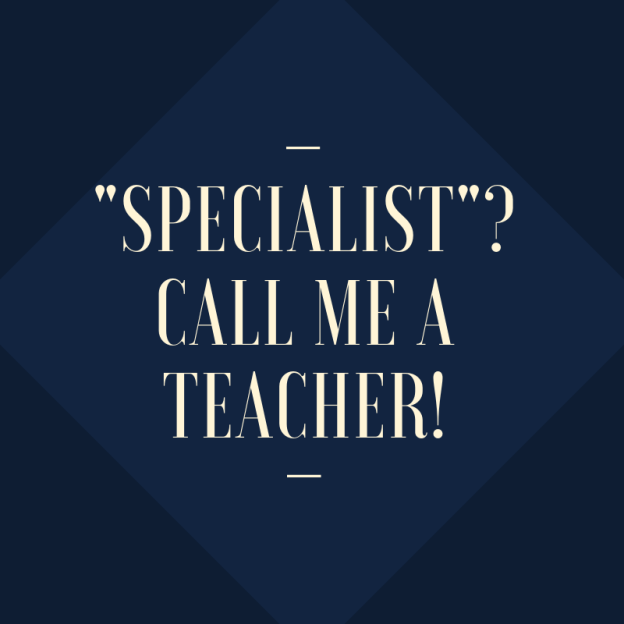
This all started out from my favorite Andy, (sorry Mr. Horne, Mr. Vasily, Mr. Hair, and Mr. Warhol), Mr. Andy Milne stating, “I hate being called a specialist.” I was genuinely surprised. I had never taken offense to being called a specialist, although truthfully I never really thought about what it meant. I asked what he wanted to be called. He replied, ” a teacher”. The more I thought about the simplicity of the answer the more it made sense.

Here are Andy’s blog thoughts:

In my 23 years of teaching I have been fortunate to work in six high schools, on two continents, all of which have valued physical education and provided students with significant curriculum time for those lessons taught by certified teachers, subject specialists. Occasionally I have taught alongside those who have been employed specifically for their coaching skills, but when that includes a number of former professional and Olympic athletes, I know that my employees have sought out the best they could find, so that students would benefit from their knowledge and expertise.

Recently I had a conversation with my good friend Justin Schleider regarding the use of the word ‘specials’ to describe teachers who teach PE, music, and art. Now I’m a sensitive soul and take offense whenever I am described as anything other than a teacher of physical education. It irks me when I am asked if I am a ‘PE Instructor’, I shudder when I am painted as a ‘games teacher’ and heaven forbid you should describe me as a ‘coach’ during curriculum time. Call me ‘gym teacher’ and you’ll have me asking “who’s Jim?”. Admittedly, at my school physical education is referred to as ‘Kinetic Wellness’ but at least I am seen as a KW teacher, and seen on a par with teaching peers of all subjects.

Although I LOVE the subject that I teach, and although my subject has been proven to boost mood, memory and learning, I don’t see it as any more special than other subjects. The Every Student Succeeds Act (2015) refers to well-rounded students and places physical education firmly ALONGSIDE those seen as traditional ‘core’ subjects such as English, science, math AND arts, music and career education. We are seen as equal.

No one subject is any more special than the other, so don’t seek to separate me and my subject from others in the same building. We teach the same, and cry care about the same students. We aren’t any different because of the types of lessons that we teach.

At a time when all in education should be united, labeling teachers only seeks to cause a divide. When we are seen as specials you can refer to us as them. And then we are one step away from us versus them, real teachers v specials. At that point it makes it easier for PE teachers to be singled out and it makes jokes about our subject more acceptable. At that point it makes it easier for you to define which spaces we can and can’t be allowed in – I defy you to make a comparison between the office spaces that PE teachers have compared to their teaching peers. I’ve literally seen PE teachers in cupboards and storage closets that have doubled up as an office and a place where lost and found can be collected.

Once you other us with your language, you make it easier to accept that students can waive out of my class, or can be exempt from attendance. Once you categorise my class as special you make it acceptable for students to substitute other activities for PE time or credit requirements. Once you see my class as something lesser than yours you make it easier to actively reduce PE time to make way for what are deemed more “serious” or “important” subjects.

Just as you would consider your use of language about and around students, I ask that you consider the language that you use about and around your teaching peers. Use inclusive language that seeks to bring us together. We can accomplish so much more when we work together.

Here are my thoughts on the idea of being a “specialist”.

For those who don’t know I teach Physical Education and Health. I believe that my subject matter is the most important subject taught in school. We are the only subject that comes close to teaching all 7 dimensions of wellness. This makes us Physed and Health teachers “special”ists, right? Sorry for the bad dad joke.

A specialist is not about being special it’s about, “…a person who concentrates primarily on a particular subject or activity; a person highly skilled in a specific and restricted field.” (link) In the schools I have worked in we hear the label of specialists being applied to art, music, physed, Spanish, and technology teachers. However, if we use the above definition wouldn’t a math, science, ELA, or any teacher who teaches a specific subject be a specialist? I would imagine that we all had to pass some sort of test such as the Praxis 2 in order to be highly qualified to teach a specific subject matter. Even if we didn’t, simply teaching that subject over a number of years would make you a specialist by default. Maybe instead of specialists, we get the related arts label slapped on us. You know the subjects that aren’t the main ones. They are just “related”.

Therein lies the problem with the label of specialist or related arts. They are seen as being outside of the academic or core subject areas. They aren’t the almighty reading, writing, and arithmetic. It creates a culture of in groups and out groups. There are the main group of “important” subjects than there are the other lesser important subjects. You know the ones where you become well rounded but really aren’t that necessary.

Now, don’t get me wrong, being an “important” subject brings the pressure of standardized testing which has lead to the decline of creativity and joy in those classes. I wouldn’t want a large part of my evaluation being tied to a standardized test but that is another subject for another time.

The idea of slapping labels on teachers divides us. It is not intentionally done but has the impact anyway. We are all teachers. The system has labeled us for so long that we don’t even question when we hear the term specialists or related arts. The bottom line is if you want to label us call us teachers. If you need to label us for some reason call us non-tested areas.

What are your thoughts on this?

#ECET2Tabs

This Friday I attended another ECET2 (Elevating and Celebrating Effective Teaching and Teachers). I have to admit these have been some of my favorite conferences. This year was Jen Sarravallo was the keynote speaker. Well she wasn’t exactly the keynote. It was a question and answer session with the legendary  Barry Saide asking her the questions that were preselected from the crowd. I don’t know if this was because Barry wanted to get some stage time or because this was a nice twist on an opening keynote. Either way it was really cool.

There was one part of the interview/questions that was super interesting. Barry asked Jen why it was important for classroom libraries to reflect the broad range of students in the world even outside their class. It seemed like Jen struggled at first but then she told a story about how she was running professional learning and the teachers were balking at the idea of having diverse books. She then told them that her daughter would not have any books showing families like hers with two moms. I had not known that she was part of the LGBTQIA community and it was awesome watching her calmly state this fact in front of the crowd. I don’t know if everyone picked up on this. In fact, I later had a conversation with a teacher who watched the keynote and hadn’t picked up what Jen was putting down.

After the keynote I presented with the legendary Valeria Brown. The session was titled Community Building Through Movement. The session was not heavily attended. By not heavily I mean there were 7 people including Val and I. Two of the seven were people I had texted to make sure they would come. I personally don’t care how many people attend my sessions and it shows how teachers don’t value movement in their classroom enough to choose that session when there were other banging sessions at the same time. This brings me to a pet-peeve I have. Why don’t local conferences spread out the sessions a little more of people who present for a living or present at numerous national, state, and local conferences? Anyway if you are interested in the session slides click here.

The rest of the day was a blur. I went to Valeria’s session about creating equitable schools and was faced with the colorblind kindness individual. This person overtook the session with the idea that if we were just kind to each other schools would be more equitable. We didn’t have enough time to properly address this in the session. The bottom line is we can not undo 400 years of brutal treatment and the flourishing of America on the backs of black and brown people with simplistic idea that being kind will solve all our problems. We need to be explicit about who and what our students are as well as viewing what they bring into our schools and classes as being positive. In order to accomplish this we must understand that their identity matters and we as white teachers need to learn more about our students who don’t look and act like us.

I have to thank Barry and Glen for hosting and bringing in some fantastic people. It was a blast hanging out with Juli B and seeing some of old coworkers. I hope people understand how much work that Barry and his crew did in order to pull this off. If you have a chance you should check out ECET2 if they have one near you.


Mere Civility

One of my favorite podcasts is called Philosophy Bites. The idea behind the podcast is: “top philosophers interviewed on bite-sized topics”. One of the most recent episodes talked about the idea of modern-day civility. The philosopher they interviewed on the episode is Teresa M. Bejan who is the author of Mere Civility and also has a Ted Talk about the same subject.

What interested me about the podcast was when Ms. Bejan spoke about modern call-out culture. It always has interested me how more and more people are calling out injustice when they see it. This idea that we “call out others” and “cry out against injustice” while not allowing the feelings of those that are actively harming students specifically in our schools stop us from speaking truth to power. This does not mean that we go out purposefully attempting to harm people. It means that we don’t allow other people’s sensitivities to get in the way of us getting the truth out or compromising our views.

In the interview, Ms. Bejan talks about the idea of civility skepticism. Civility skepticism is:

“…the idea that civility is not a virtue at all. Its a way of trying to silence the speech of others. The way of trying to suppress ideas that you don’t like or even exclude or marginalize those twithwhom you disagree or don’t even see as members of a civil or civilized polity. Civility in an unjust society isn’t a virtue at all. Not only do we have a duty to tell the truth and not to censor ourselves out of respect for someone else’s feelings it’s actually a duty to offend their sensibilites because those priviliged by an unjust status quo will always be offended when they are presented by the truth.”

It looks like she is actually making the case for being uncivil. We have a duty to ourselves to be open and honest when we have a disagreement. Dr. Brene Brown calls this “clear is kind”. There is a point to disagreement though where being uncivil is counterproductive to our goal of engaging in the disagreement.

“If civility is a kind of claim to regulating or governing our disagreements on the basis of something shared then what really matters is exactly what we need to share in order to have a civil disagreement. Rejecting civility all together under-reacts to the challenges that disagreements particularly disagreements about questions that we deem fundamental, maybe questions about religion and politics (and race), that go to the heart of how we see the world and each other. That those kinds of disagreements are hard to have and yet we need to be able to have them. When we talk about civility we talk about what are the qualities of a conversationalist that make those really difficult disagreements possible. “

To me, this makes civility a fluid idea. Civility would vary by who we interact with and what both of us consider civil. This also raises the idea that being civil with people who do not honor your humanity is a pointless endeavor. If we both don’t come to the disagreement with the idea that the other deserves the basic rights and privileges of a human being on this planet than we don’t have a disagreement, we have incompatible views of right and wrong. In my opinion, civility is not called for, nor needed in this scenario.

The gold nugget from the podcast was Teresa M. Bejan’s philosophy of Mere Civility.

Mere Civility I would define as minimal conformity to social norms of respectful behavior. Specifically the minimum necessary to keep the conversation going. You can tell the demands of Mere Civility in any given conversation are highly context-dependent and highly audience dependent. Instead of fixating on rules of civil conduct we think about civility as a prudential or practical judgment about what’s required in a given conversation with a given conversationalist so that conversation can continue. But then it has this other element which is that it remains committed also to telling the truth to our interlocutors and part of that truth involves telling them what we really think of them and their views. Mere Civility is a commitment both of not pulling our punches but also to not landing them all at once so that conversation can continue.

This was mind-blowing to me. I recently have had a friendship stop because I landed all my punches at once. The conversation no longer continues. That is not what I wanted to happen with this particular relationship. There have been other times where I have been in disagreements with those I have no social capital with and Mere Civility was not necessary because I did not want nor need the conversation to continue.

As always I appreciate you taking the time to read and engage in my work. If you have anything you would like to add or discuss please leave a comment, hit me up on Twitter @schleiderjustin or join me on Voxer as we discuss everything education.