Source: The Equalizer
The Equalizer
1 Reply
Source: The Equalizer

There once lived a young boy who tried really hard. He didn’t master the standards. He didn’t pass the class.
There once lived a young girl who didn’t work hard at all. She mastered all the standards in class. She passed.
Work ethic and participation have no place in a grading policy. A student should be graded purely on whether or not they learned the material required. This can be done via portfolios, tests, quizzes, essays, or a billion other ways. Grading a student on participation does them and you a huge disservice. You are believing the myth that if you work hard enough you can achieve anything.
You also believe that you can see past your own bias and viewpoint. How do you know how much a student participated? Where in the standards is participation? If it is one standard out of 10, 20, or 30 you are grading why is it worth so much weight?
Participation is an expectation.
If students are not participating they cannot demonstrate mastery of the standards. That is the issue. Find out why your students aren’t participating and fix your class, your teaching style, or your content.
How do we know who is participating? Ask them? Ask their teammates? Heart rate monitors? Does that tell the real story? It is a subjective process that is difficult to assess at best impossible to assess at worst.
Please stop telling our students that just doing something is good enough. They have to understand that learning is what we grade. Participation can be discussed and assessed but not graded.

 If you have noticed the #metoo in your Twitter or Facebook feed it means that the women you consider either virtual or physical friends and family have been sexually harassed or assaulted. Let me rephrase that. The women you value and believe are worth being connected to, have publicly posted that they have either been raped, physically molested, or verbally abused.
My timeline is filled with that hashtag. These women are baring their soul to the world so men like myself can understand just how prevalent this is in our culture. The worst part is there are probably more women who do not want to publicly relive their trauma and are staying silent (for which they should take 0 blame).
Here are what the stats say:
On average, there are 321,500 victims (age 12 or older) of rape and sexual assault each year in the United States. Link
Ages 12-34 are the highest risk years for rape and sexual assault. Link
Rape and sexual assault start at 12 years old! We have to use this data to inform our students NOW! This means starting in 5th or 6th grade we have to talk to both our boys and girls about this. There is no time to waste.
As of 1998, an estimated 17.7 million American women had been victims of attempted or completed rape. Link
82% of all juvenile victims are female. 90% of adult rape victims are female. Link
Females ages 16-19 are 4 times more likely than the general population to be victims of rape, attempted rape, or sexual assault. Link
Women ages 18-24 who are college students are 3 times more likely than women in general to experience sexual violence. Females of the same age who are not enrolled in college are 4 times more likely. Link
There is no question that women are the most vulnerable to rape and sexual assault. No one deserves this. Not a female wearing a short skirt or one wearing a parka. You can not ask to be sexually harrassed or sexually assaulted. When we teach our girls that wearing certain clothing will bring unwanted attention what we are really saying is that men can not control themselves so you have to make sure not to draw their eyes on you.
As of 1998, 2.78 million men in the U.S. had been victims of attempted or completed rape. Link
About 3% of American men—or 1 in 33—have experienced an attempted or completed rape in their lifetime. Link
1 out of every 10 rape victims are male. Link
Although #metoo is about women who have been sexually abused or sexually assaulted it does happen to men too. I am not writing this to derail nor detract from the hashtag at all. We do have to understand though that it does happen to men against their will. We have to get rid of the men can’t be raped culture.
21% of TGQN (transgender, genderqueer, nonconforming) college students have been sexually assaulted, compared to 18% of non-TGQN females, and 4% of non-TGQN males. Link
You see the stat. It needs to be addressed in our schools so our students who are TGQN and go to college understand the risks they are facing.
94% of women who are raped experience symptoms of post-traumatic stress disorder (PTSD) during the two weeks following the rape. Link
30% of women report symptoms of PTSD 9 months after the rape. Link
33% of women who are raped contemplate suicide. Link
13% of women who are raped attempt suicide. Link
Approximately 70% of rape or sexual assault victims experience moderate to severe distress, a larger percentage than for any other violent crime. Link
This affects women for the rest of their lives. One of my friends told me she can recall every detail of her ordeal that was almost 20 years ago.
We could go on and on about how women who have been sexually harassed and assaulted have higher rates of drug and alcohol abuse, lower life expectancies, and poorer job performance. It destroys women’s lives. We need to address this in schools. One way to do this is to show this video called Tea Consent. It really hammers home what consent is taking that abstract concept and putting it as concretely as a cinder block for our students. Charlie Rizzuto also just shared this rap about consent from Andy Horne. If you want more ideas about how to teach about consent, sexual abuse, and sexual assault I would recommend getting in touch with High School National Health Teacher of the Year Andy Milne (@carmelhealth). He has a million resources and a couple of blog posts he can link you to.
Finally, I would like to thank Steve Isaacs who credits Christina Marie with the idea of the #IBelieveYou. The statistics are out there. We need to start supporting the women who come out and report the sexual abuse and sexual harassment they are receiving when they report it. It’s time that we stop pretending that the .0000001% chance of someone lying is enough to wait until the evidence comes in. At the very least we need to stop victim blaming and worry about what they were wearing, what they had to drink, or why someone went to a hotel room. All of that is immaterial. The only time someone should drink tea is when they choose to. (watch the video)
To all the women who have had made the public sacrifice to step forward with your story #IBelieveYou.
NJPAECET2 just wrapped up. In case you were wondering like most people will, ECET2 stands for Elevating and Celebrating Effective Teaching and Teachers. It is a conference that is half fundraised and half paid for by the Bill and Melinda Gates Foundation. They do a fantastic job of Elevating and Celebrating Effective Teaching and Teachers. Meals and lodging are covered allowing you to fully immerse yourself in the experience of a conference without having to worry about a thing.
This event reminds me of a smash between a conference and a summer camp retreat. They really work hard to bring people together and almost force serendipity to occur. The day started out with us having to stand and sing a song. The song was quick and easy but not gonna lie I hate singing with a crowd. I never remember the words, have a horrible voice, and no rhythm at all. With all that being said, the leader had a great voice and singing is a great way to get the crowd excited. Any time we are standing and not just sitting is also a bonus.
The opening keynote was great. They showed a clip with a Admiral William McRaven about how to change the world. He spoke about the importance of making your bed. The premise of this idea is that if you start out with an easy task and complete it that will help propel your day. In addition, when you get home at night you come back to a successfully completed task. It was very inspiring.
I also watched a clip of a football coach motivating a player by yelling at him in a positive manner. The coach was trying to help his player achieve more than they thought they could. I understood the video’s aim at showing if you encourage a child they can achieve more than they think they could. The video came across more like a coach uncomfortably yelling and wanting the goal more than the player. I do not want to have to yell at my students repeatedly even in a positive manner in order to motivate them. The video should have the coach walking next to the student or perhaps giving advice when needed. Even better what if the coach did the bear crawl with the student? Watch the video and tell me what you think!
The first session I went to was entitled Be an Advocate for the LGBTQ community. There were two members of GLSEN that ran a fantastic session! I learned the history of the LGBTQ community in a way that touched my heart. One presenter handed out cards with milestone events of historical events that impacted their community. Our job was to stand up and put those events in historical order. First, that is a fantastic way to run a lesson or professional development. We were up, working together, and learning all at the same time. I stole that idea right away. Secondly, when we were discussing the events that had occurred during their lifetime you could see how they had emotional ties to some of the events. It was powerful to watch both presenters speak with such passion about Title IX or the legalization of Same-Sex Marriages. You could see them reliving the moment. It was a fantastic session that I was happy I attended.
My second session was called Professional Development over Professional Dissonance: Designing PD from a Systemic Perspective. This session was presented by Mike Ritzius. He is a NJEA associate director of professional development and instructional issues. I have heard him speak about this idea in the past but I was still confused and needed a much deeper understanding of the topic.
I walked away understanding a lot more about the why and the what and am still confused with the how. The system has no mechanisms for change. We are changing but the system isn’t changing around us. How can we change the system? Our school has the ability to change with relative quickness. We are a small school and are the only school in the district. I equate us with being a small fish that can adapt quickly to a stimulus. This gives us a leg up in our ability to make large changes with relative ease. I will be approaching my admin and union to see if we can bring the NJEA in order to make that happen.
The session was followed by the keynote of Awo Okaikor Aryee-Price. Okaikor shared her story which was clearly emotional to her. I enjoy watching people be real and hearing personal narratives. The idea that, “good teachers are also critical of society and push for equity in their work/classroom” is something every educator needs to hear and understand.
Her speech sparked a conversation later about when and where we need to hear this message. I understand that ECET2 is all about elevating and celebrating teachers. The teachers that were being elevated and celebrated still have the responsibility of understanding all of their students. That means that bias has to be addressed. People have, and always will, think that speaking about race and equity should be done at a different time. There is never a “right time”. Let me switch that up. It is always the “right time” to speak about race. We saw torches and Nazis in 2017. We are not talking about that or what causes that in our classrooms. Worse our own bias is harming Students of Color. I think Barry Saide made a fantastic decision when he chose Okaikor to speak about her story and equity.
Session 3 was called Thinking Like Socrates: Teaching Students to Ask Their Own Questions At Every Level. Shanna Peeples told her story about changing her writing prompts from teacher centered to student centered. That wasn’t the gold nugget though. She asked her students, “What would you ask the smartest person in the world if you had the opportunity?” The responses she received were way above what she expected. One student asked why did God give us free will if he wanted us to be good? That is a pretty powerful question.
This is another really great way to get to know your students and use that knowledge to drive instruction. As most of you know empathy and the affective domain have been a large focus of my teaching in the past two years. This is another great way to start a discussion as well as allowing our students to have space where they can decompress and really reflect on their lives in an authentic fashion. Check out her presentation here.
Mike Ritzius ran an unconference called ProAction Cafe. People could pick a problem they had and post it. Participants then rotated to three different tables and answered the question that was prompted in the front of the room. It was a fun way to interact with different people. Sometimes meeting and hanging with different people is as important as the activity.
The evening keynote was done by Chrissy Romano. She rolls with the moniker @TheConnectedEdu on the Twitters. Her speech followed my rules of a great speech. Make me laugh, make me cry, and have me walk away with a message. Chrissy started out connecting the room with her kids with the help of pictures and anecdotes. She then went on to tell us how they both struggled with an illness that was invisible. I would be doing a disservice to both her and her story if I attempted to capture the feeling in the room after her speech. All I can say is that there were many sweaty eyeballs and not one bottom was sitting down when she was done.
I walked away with the message that just because the students in my class looked healthy doesn’t mean they weren’t struggling in one of a million other ways. This idea of building relationships and getting to know our students continues to be a message that we hear but don’t always practice enough. It’s funny how simple of a concept it is yet how difficult it is to achieve.
The next morning started out the same as the day before. More singing. I was more into it this time. It was time for my 9:20 presentation on Learning With Movement. The idea of the session was to give the participants some ideas on how to teach with movement. The idea is that movement can be used authentically to teach in a new way. It is a very powerful tool that we should be adding to our teaching toolbox. The idea that students learning will be deeper when we connect the knowledge with movement. If you want to learn more check out my presentation here.
The final session was called Supporting Ourselves and One Another Through the Lens of the Whole Learner. Amanda Britt ran us through personal wellness and hammered home the why. We briefly exercised using tabatatimer.com. Her session again crossed into the idea that in order to help others we must help ourselves. I would imagine that Lavonna Roth would approve as this lines up perfectly with her movement of #IgniteYourShine.
I will finish my blog with Glows and Grows (thanks for that Grows idea Fade) from the conference.
Glow: There was a boatload of signs directing me on where to go. I need those.
Glow: The atmosphere was created where participants were encouraged to have fun and learn.
Grow: The picture of the organizing team racial makeup mirrored the Brooklyn Dodgers in 1947 after Jackie Robinson broke the color barrier. The team was all white with one visible Person of Color. This has to be explicitly and purposefully addressed.
Glow: Having the presenters that were flown in to run pd the day before the conference. That is brilliant. My school will be knocking on your door next year.
Glow: Lavonna Roth. She glows. #igniteyourshine
Grow: The crowd was very white as well. We have to reach out and bring in educators of Color.
Glow: Chrissy’s speech. Amazing.
Glow: The days ran smoothly and it was well organized.
Glow: The culture and climate of the conference was fantastic and positive.
Glow: Mike Ritzius. His hair.
Grow: Hotels were really far away. If possible switch them closer.
If you ever have the chance this conference is worth your time. I appreciate everyone’s hard work and effort they put into it for free!
“The term in loco parentis, Latin for “in the place of a parent” refers to the legal responsibility of a person or organization to take on some of the functions and responsibilities of a parent.” (link) Using that line of thought, do we have a moral and ethical responsibility similar to the legal responsibilities to those same students? I believe we do and that our job is to teach the whole child. This means that I have to address their emotional, social, and spiritual well-being as well as their physical wellness.
To be honest this has pushed me further out of my comfort zone than I had anticipated. I am not explicitly teaching in the psychomotor domain but instead focusing on the affective domain. It is counter-intuitive for me. Shouldn’t I be focused on how they are moving not why? If I was looking for the short term I would say yes. I care more about the long game though. How can I set my students up to realize that movement is beneficial to them for now and the future? How can I create an atmosphere and culture that invites ALL the students in? That’s what I care more about. As the month comes to a clear I will move along into a more Game Sense/TGFU lesson with the help of Seth Martin’s yearly plan.
My 4th, 5th, and 6th graders have all been playing their own games or physical activities and reflecting on why they chose and enjoyed that activity. My 4th graders have moved from partners to small groups. They will finish with large group games next week. We will then compare and contrast those activities.
I taught one lesson to my 6th grade that had only 6 minutes of mvpa time. This particular class needed to discuss racism, race, and discrimination. I spoke with Andy Milne and he gave me the idea to jigsaw four stories that Students of Color had told during a radio interview. Each group read one story, wrote their thoughts down on a whiteboard, and then presented their story and thoughts to the class. Each group also had a second whiteboard to write down any thoughts they had about another groups story. We were able to speak about the n-word, discrimination, prejudice, race, and how they will be in a much more diverse school next year.
The lack of movement in the class was a necessary trade for the knowledge and discussion that was engaged in. I am not advocating that this should be the norm or that any other Phys Ed classes I teach will have such low mvpa (moderate to vigorous physical activity). The point is that I teach the entirety of children. If there is an issue that needs to be addressed I will do what is necessary to address it in the best way I know how. If this means that I have to deviate from the norm than that is what I will do.
My pre-k to 3rd graders have been working on locomotor movements and spacing. I have used this game to teach spacing and defense from Brian Lewis. It is an awesome way to incorporate underhand toss, defense, and spacing. I also snuck pivoting in as well. The basic idea is for two students to pass the ball to each other using the underhand toss. You can not take any steps with the ball you can only pivot and turn. Once you reach the other side of the gym the goal is to knock down a bowling pin. As the game progresses you can add defenders and move the approach line back. The kids loved it.
I also used this game created by Joey Feith and posted on his website. The beauty of this is that I brought up the video in the gym and we did each build together. The students loved the game, especially the booty box! As you can tell I am using the resources I come across to bring a better experience for my students. That is the importance of being connected. It is not look at what I am doing. It is look at how I am becoming a better teacher for my students by using the resources that I have come across.
Speaking of another really cool resource Mike Ginicola posted this really cool resource utilizing cartoon characters and locomotor movements. The students did different movements in order to get from one character to the next. I switched it up a bit and had the pdf projected and had them do the movement while saying the alphabet or counting to 10. This was a very easy and effective lesson because I didn’t have to create the resource. Again that is the beauty of being a connected educator. I want to work smarter not harder.
Hopefully, this will help someone else with either the resources I have linked or the idea that teaching to the affective may be more important than teaching explicitly to the psychomotor for Physical Education teachers. Crazy humanism approach to teaching. I know.
Here are the most important standards for 4th, 5th, and 6th grade Physical Education to me.
Describes/compares the positive social interactions when engaged in partner, small-group and large-group physical activities. (S5.E4.4)
Describes the social benefits gained from participating in physical activity (e.g., recess, youth sport). (S5.E4.5)
Identifies the components of physical activity that provide opportunities for reducing stress and for social interaction. (S5.M2.6) Describes how moving competently in a physical activity setting creates enjoyment. (S5.M4.6)
We have spent the first week breaking the standard down together as a class into kid-friendly language. Once the students came up with their definition and we had discussed it as a class they wrote it in their Seesaw account and sent it home to their parents and guardians.
They spent the rest of the class creating and playing partner games. At the end of the class, they wrote down why they enjoyed doing the activity with their partners. We will move on to small and large groups with the same idea of deconstructing what makes it enjoyable to move with other people.
Once we have all the information we will attempt to make a concept map. This will guide us throughout the year on why we are moving and what we gain from doing it with other people. It’s not fancy or especially tech savvy. It’s just the most important thing I can possibly help my students to discover and analyze.
Educators, begin the school year strong with pedagogical strategies that counter larger systems of oppression.
Join MAPSO Freedom School and other educators for a Charlottesville Teach-In, your critical professional development and back-to-school anti-racist survival guide. After large group discussion on the social/historical context of the terror in Charlottesville, breakout sessions will focus on responsible teaching in a violent culture, the intersections of race and standardized testing, addressing systems of oppression in subjects like math and science, language and false narratives, and the role of white educators in both upholding and dismantling systems of oppression.
This is the event that I attended on Saturday, September 9, 2017. It started with a keynote from Dr. Leslie Wilson. He had a couple of statements that really made me ponder. The first one was that in 2045 the census bureau predicts that the United States “becomes a majority minority”. What does that mean for us as a country politically, racially, educationally, and all the other allys that I am missing? Will the shoe finally be on the other foot? Where will the power and money be shifted? Will we have to wait that long for us to finally acknowledge our sordid past?
The next point he raised was that the statues in Charlottesville were dedicated to traitors to our country who lost the war. What other country are traitors celebrated with streets and statues lionizing them? Could you imagine a Hitler Avenue (thanks Dr. Bree) in Germany or Stalin Drive in Italy? It’s that simple. There is no discussion or argument that can erase that fact.
One of Dr. Wilson’s other fantastic illuminations is that we have to teach our children that America is not the perfect country that we pretend it is. He didn’t end there though. His full statement was, “America has never been perfect we are working toward perfection. Our students will lead us there.” That is powerful. We have to acknowledge our past but still aim for the American dream of becoming the land of the free and the brave. I too believe that our students can lead us there.
The next speakers were named Dr. Rhea Almeida and Diana Melendez. They both worked for the the The Institute of Family Services. Their talk was the kind that I really dig. They had a clip from the movie Watching Even the Rain. After the clip was shown we had the most interesting dialogue based on this image.
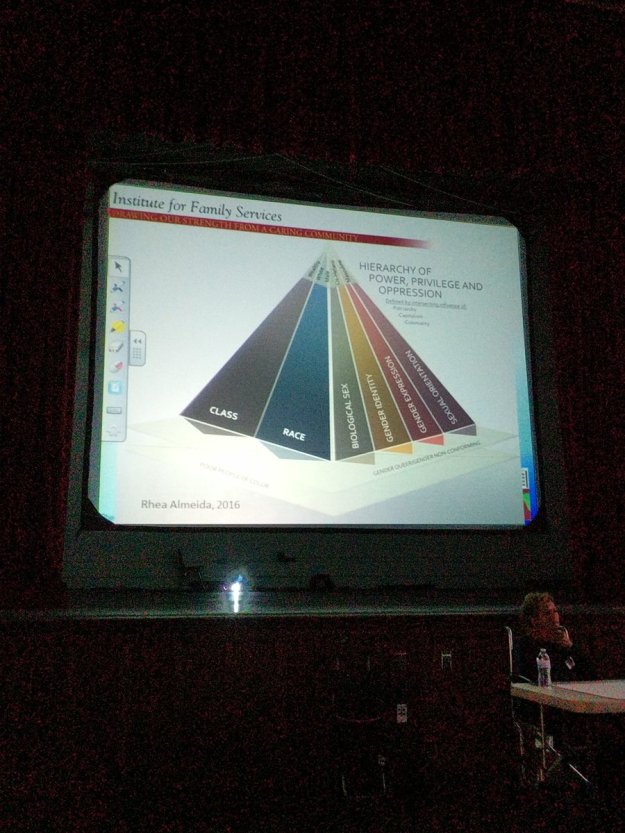
The amazing part was that the audience was filled with such a bastion of social justice knowledge that the discussion was rolling deep. It’s truly astounding when a group of brilliant people (myself excluded) can riff about something. It was a shame the time was so short because the dialogue could have continued for an hour easily.
The dialogue centered around the characters and what their hierarchy of power, privilege, and oppression was. It was interesting how point of view has a lot to do with privilege. There were a couple of people who thought one character was Latino while others thought he was white. That interpretation of race changes where the character would be placed on the prism. How often in life does that happen with people? We assume a person is one thing when they identify as another. How does that change where society places them on the pyramid?
After the two speaking slots, we went to a breakout session. The session I chose was about anti racism in elementary (primary) schools. Dr. Bree did an excellent job of having us interact with each other, getting out of our seats, and creating a safe space to speak.
The major takeaway that I was really able to reflect on was that at this juncture we need to camouflage culturally responsive teaching into our lessons. Any system has its rules and norms. School is no different. One of the rules we need to follow is that we must teach the standards that we are certified in. Some feel the standards need to go but that is a discussion for a different day. When we take the king’s gold (get paid) we sing the king’s song (follow the rules). With that being said every subject has a standard where social justice can be infused with it.
Here are 8 quick examples of how you can be “covered” or “justify” to your administration and guardians why you are teaching culturally responsive or anti racist material in your class. Every one of them is a New Jersey standards that should be mastered by 4th/5th grade.
Social Studies: Equality and fairness. Jim Crow discussion here we go!
Math: Fractions. 3/5 compromise would fit in perfectly here.
Social Studies: Historical Text. Say no more.
Science: Natural Resources. Humans are natural resources. Discussion on slavery and not being compensated for your labor.
Technology: Learners of other cultures. Engage with people and their cultures who don’t look and act like your students.
Art: Compare and Contrast. Find work from People of Color and various time periods. Great way to show the value they have added instead of highlighting the plight or deficit of PoC.
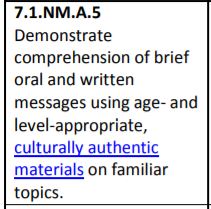
Language: Culturally authentic materials. IT’S TELLING YOU BRING IN VARIOUS VOICES!
Physed/Health: Basic human need. Discrimination! Mic drop. I’m out
The point of those examples was to show that in order to be a culturally responsive teacher we don’t have to go outside our area of expertise. The standards are there supporting us! We just have to embrace them.
Dr. Wilson brought up the point that waiting until college to teach our students the real history of the United States is wrong. I believe we need to start discussing skin color, religion, gender, disabilities, and any other identifiable factor with our students starting in kindergarten. Read this to verify the following facts:
Infants begin to notice and respond to skin color cues ( around 6 months old)
1-2 year olds are curious about physical characteristics of self and others (skin color, hair texture, gender anatomy); May “match” people based on physical characteristics.
3-4 year olds Identify and match people according to “racial” physical characteristics and groups, but often confused about complexities of group categories (e.g., “” How can two
children with dark brown skin be in different groups, e.g., African American and
Mexican American).5-6 year olds Show evidence of societal messages affecting how they feel about their self and /or group identity, i.e., evidence of beginnings of internalized superiority (IS) or
internalized oppressionMay select to play only with children close to their gender and racial/cultural
identities, but may also reject members of their own racial/cultural group (e.g.
darker skinned African American children, Spanish-speaking Latino children)May use prejudicial insults and name-calling to show anger or aggression, knowing
that these terms hurt.
Do those facts make you think we need to wait to talk about visually identifying characteristics? Dr. Bree hammered it home when she said we teach our preschoolers to sort by colors and then turn around and say our kids don’t see color.
I would like to thank Mapso and specifically Okaikor for creating a day that can change students lives. The time for talking is over. We now need to take what we are learning and put it to good use.

This week I have a guest blog that cut right to the heart of what depression is and what it looks like. Take a look at what is going on with the people around you and be cognizant of any changes in them. You never know where and when depression may strike.
I can’t stand this constant feeling of self-doubt and worthlessness. I’ve always been one that has poo-pooed mental health issues, especially “depression”. Maybe I felt that the term was just thrown around too often and easily, or that I possibly didn’t think it truly existed. That was until just recently when I came to the realization that I was stuck in the middle of a depressive episode that wouldn’t go AWAY!! I’ve always had these feeling of self-doubt, low self-esteem, sadness, fatigue, etc., but I would simply attribute it to stress. Everyone has stress, everyone feels this way sometimes, right?? As I write this, I hope it provides me with a way to deal with this current episode. About 2-3 weeks ago, with the start of a new school year, I noticed these feelings starting overcoming me. As I dismissed it as stress, I went about my normal routine of exercising, eating right, working on what I was passionate about (PE, Teaching).
Previously, these feeling would subside after a day or two so I wouldn’t think anything of it. This time days went by and they were still there, getting stronger. One of the first things I did was look up symptoms of “depression” on WebMD, Mayo Clinic, and CDC websites. As I scanned the list of symptoms I was able to check them ALL of, and it hit me like a ton of bricks!! The biggest thing that I noticed was that I had NO desire to do anything that normally mattered to me. I stopped working out, began to eat like crap, had no interest in Social Interaction (left all Social Media). To make things worse, this all began as the school year started. I do my best to put on a good show at school!! It’s a struggle at times, but being with the kids makes it easier. By the end of the day, I’m beyond exhausted. I’m at the point where I stopped bringing anything home to work on, I’m considering NOT having my after-school running program, stopped helping other teachers. I tend to stay in my hole, come and go without much interaction at all. It’s tough to get excited about things when you feel like nobody appreciates you and what you try to offer. Professionally, I’ve offered to help or be apart of special/extra groups or projects that I’m extremely interested in, but have been told no or have simply heard no response after days/weeks.
I’m at the point where I stopped bringing anything home to work on, I’m considering NOT having my after-school program, stopped helping other teachers. I tend to stay in my hole, come and go without much interaction at all. It’s tough to get excited about things when you feel like nobody appreciates you and what you try to offer. Professionally, I’ve offered to help or be apart of special/extra groups or projects that I’m extremely interested in, but have been told no or have simply heard no response after days/weeks.
It’s hard to quantify what it’s like to have these thoughts and feelings. I’m constantly exhausted, no interest in hobbies/passions, self-doubt, worthlessness, anger, sadness, even suicide. There have been times in which I’ve put considerable thought into the easiest way to kill myself(where and how). In these periods of absolute darkness, it’s been my Kids that squash any of these thoughts. It becomes almost impossible to love anyone else when you don’t love yourself. My kids have been the only exception. I couldn’t imagine putting them through the loss of their father. And although I don’t always have love to give, they seem to find a way to sure their love with me. If I didn’t have them in my life, I’m not sure I’d be writing this.
I look back over the past 20 years and it hits me that this isn’t the first time I’ve experienced these thoughts and feelings!! I can honestly say that I’ve probably ruined many relationships because of it. Truthfully, I don’t have many friends! None from high school, college, work or my neighborhood. I used to always blame others for not calling, hanging out, etc. As I come to terms with what’s actually happening I’d be willing to bet I had a large part in how things transpired. I hope that by finally acknowledging what I’m going through I can keep from ruining the few relationships I have. There are a handful of friends, you know who you are, that I truly respect and admire who have influenced me to share my experience. Without them, I would never have the courage to share my story.
As this inner fight continues, I hope to find the strength to overcome these feelings of isolation and despair. I ask you to always consider the emotional state of others as we may not realize what they are going through. If someone you know becomes distant, temperamental or just “off” please reach out, show you care! The smallest gesture could mean the world of difference to someone.
I know life is turbulent with school starting, the state of our country, family, and every other emotional and physical drain we have. However, we can’t forget that the individuals that surround us have to be a priority. Please make sure that you are checking in with your loved ones and making them feel that you care about them. Thank you for reading this blog and I love you all.
There were two whirlwinds that caused major disruption over the weekend. The first one devastated Houston and was named Hurricane Harvey. Two people have already died and the flooding doesn’t seem to be subsiding anytime soon. The Houston Independent School District has already cancelled school for the week. One can only imagine the destruction that flooding will do to the buildings as well as the supplies and electronics in there.
One tweet really caught my eye about the storm. As I look at the coverage of the storm in the next few weeks I will examine who is being harmed the most in this
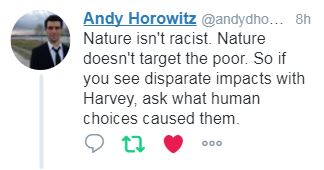
process. I am sure that it will be eye opening for me to see what exactly systemic inequity looks like now in my social justice journey as opposed to when Hurricane Katrina hit and I was still unaware of how exactly race, gender, culture, SES, and religion all intersect and affect people. I realize that this is what social justice advocates and change agents have been yelling from the rooftops for years it just took me longer than most to get a clear understanding of what this looks like systematically.
On a more positive note, the second whirlwind I alluded to early was the #PhysEdSummit. This could have been the most impressive 24 hours of professional development that Team Physedagogy has produced yet. My favorite session so far was done with by Dr. Martha James-Hassan. Her session was titled: Anatomy of Inequality: Understanding the role of physical education in addressing the academic needs of the whole child. Martha is someone who is going to push your thinking farther than it has ever gone before. She currently teaches at Morgan State University which is a HBCU (historically black college or University). I personally consider her to be one of the trailblazers of social justice in all of education not just PhysEd.
The one line that stood out to me in her presentation was that we need to know how to code shift. It immediately struck me that she used code shift instead of code shift. I had understood code switching to be,
…the use of one dialect, register, accent, or language variety over another, depending on social or cultural context, to project a specific identity link
In my life, an example of this would be the language I use at school in my classroom versus the language I use when I am playing in my old man basketball games. I would imagine that most people do this code switching without even realizing it.
Dr. James-Hassan used the term code shifting. When I asked her about this she said that code shifting was the idea that you are staying truer to yourself. This makes much more sense. I am not trying to be someone else when I change the way I speak. I am just different versions of myself. I highly recommend you watch her free YouTube presentation using this link.
I was lucky enough to also facilitate a session on how we use social media to reflect and change our educational practices. The panel that was assembled was second to none! We had Sherri Spelic, Ron Madison, Mike Morris, Rich Wiles, Shre Lynch, Dorian Roberts, Makisha Rodgers, and Toutoule Ntoya enlightening us on the various ways to produce as well as consume using social media. The idea behind the session was that if you aren’t changing your practices using social media than you are wasting your time. If you would like to watch the session click this link.
One of the great takeaways from the session was the cooperative games unit created by Rich Wiles on the US OPEN website.
Each activity is meant to provide a global education experience in a setting that stretches just beyond a student’s comfortable performance zone.
Another gold nugget was Ron Madison describing how he uses OBS when he Periscopes or does Facebook Live. OBS stands for Open Broadcaster Software. It basically gives you a boatload of options when you record your live feeds. You can check it out more here. Also, follow Ron Madison on Twitter to see his #Passthescopeedu.
One of my favorite writers in all of education is Sherri Spelic. She goes by the name @edifiedlistener on Twitter. Her blogs cover everything from her renewed participation in sports to her teaching to social justice to digital equity and so much more. When I get alerted that she has written a new post I carve out some time when I can really sit down and internalize what she has written. The fact that she made the time to jump on the panel warmed my heart.
I really appreciated everyone giving their time to either participate or watch during the PhysEd Summit. Together we can raise not just Physical Education but all of education to heights it hasn’t seen before. This can only occur when we get to the point where we understand that we are the change agents that are the world’s last line of defense against hatred, bigotry, and the devaluation of education.
My heart goes out to those in Houston. The Houston Food Bank, Galveston County Food Bank, and Corpus Christi Food Bank all are accepting online donations. If you have a couple of dollars please help those who need it the most. Thank you.
I am sitting on a plane on my way to California to speak about movement in the classroom to a group of teachers. I strike up a conversation with a Jewish woman next to me who is reading a book the Talmud. A young man who looks of Indian descent is having occasional outbursts is seated to my right. A Latin X gentleman in front of me is rocking the man bun while a woman of Asian descent is waiting for the food cart to move so she can sit back down. I have officially left my bubble and entered the real world. The past couple of years has forced me to readjust how I look at the world and the people in it.
I received an email from Rich Dixon asking me if I would like to present to a group of educators about movement in the classroom in California. I met Rich at the Cue Nevada state conference last year which the fantastically amazing Heidi Carr had invited Sarah Thomas and me to attend as well as keynote. I have written previously how Rich opened my eyes to what badging should and could be. The idea is that a badge should be linked to the evidence that was created to earn it was definitely a game changer for me.
I responded that I would love to speak about movement let’s get this thing rolling! Rich got me in touch with Michelle, my conference liaison, and I asked her what they wanted me to speak about. She stated they wanted me to address crossing the midline, technology’s role in attention span as well as movement in the classroom. I knew one out of three of these topics extremely well so of course, I said yes! Wonder if this link has anything to do with that!
The first thing I needed to do was find the research about crossing the midline. I knew that Mike Kuczala had a boatload of activities that I could use to show how to cross the midline in his book the Kinesthetic Classroom. That seemed like a logical place to start. The problem is in his book he just states that there is not a lot of research showing the positive effects of specifically crossing the midline. My next step brought me to Brain Gym.
Brain Gym® movements, exercises, or activities refer to the original 26 Brain Gym movements, sometimes abbreviated as the 26. These activities recall the movements naturally done during the first years of life when learning to coordinate the eyes, ears, hands, and whole body. The twenty-six activities, along with a program for “learning through movement” were developed by educator and reading specialist Paul E. Dennison and his wife and colleague, Gail E. Dennison who say that the interdependence of movement, cognition, and applied learning is the basis of their work. Clients, teachers, and students have been reporting for over 20 years on the effectiveness of these simple activities. Link
I ran into a couple of problems when attempting to find results from Brain Gym. In their own words, “Some academics consider only experimental research (statistical research with control groups) to be scientific. You’ll find the studies that most adhere to this standard in our Annotated Research subcategories “Quasi-Experimental Research” and “True Experimental Research”. Link They also publish their own journal and cite evidence there. While I value anecdotal evidence I can’t in good conscience present material that is published by a for profit company by that same company. I also came across some information that directly discredited the company’s work. link
Luckily I had an ace up my sleeve. The man the myth the legend Mike Kuczala himself. Mike is on Voxer and readily gives the #PhysEd and #HealthEd community his time and energy. We had some really cool discussions and I was finally able to come up to terms with this thought process. Crossing the midline falls under that category of bi-lateralization. Bi-lateralization refers to the ability to coordinate both sides of the body at the same time in a controlled and organized manner.
There are numerous valid and reliable resources that show how important bi-lateralization is for the human brain and body. All crossing the midline activities are bilateral but not all bilateral movements involve crossing the midline. Let me give you an example of this. In the beginning of Mike’s TedX talk, he has us grab our nose with our right hand and grab our right ear with our left hand. He then instructs us to switch our left hand to our nose and grab our left ear with our right hand. That is crossing the midline because our body parts crossed over the imaginary line that divides us into the left and right side of our body. Dribbling two basketballs simultaneously with your right and left hand is an example of bilateral movement because there are no parts of the body that are crossing the sagittal (lateral) plane.
What I can safely say about crossing the midline is that they are fun brain boosts and work on bi-lateralization which improves the brain’s ability to speak to the left and right hemisphere by creating a thicker corpus callosum well as creating thicker myelin sheaths. Myelin allows your brain to send information faster and more efficiently, making it absolutely essential for the optimal functioning of your nervous system. (link) I cannot, however, state that crossing the midline movements are better than bilateral movements that do not cross the midline.
If you thought that my journey on finding research about crossing the midline was difficult I came up with another journey when I tried to find a link between the increase in the use of technology and the attention span of our children. I actually found very little research about attention span at all. One of the reasons for this is that there are so many variables when figuring out attention spans. The same kids we label with attention span difficulties can participate in activities they find engaging for hours. Think about your own attention span. You struggle to listen to a speaker who talks at you yet you can binge watch on Netflix without looking at your phone for hours.
 I did stumble across some research that allowed me to form an interesting hypothesis on why our students are so attach
 ed to their tech. When you have something that is liked or favorited on social media that activates the same receptors in the brain that eating chocolate or winning money does. (link) Might this include getting a text message or alert on social media as well? We as teachers are forcing students to learn about things they may not necessarily care about and are simultaneously fighting the feelings of winning money and eating chocolate!!
The next logical question is what do we do with this information? Do we only teach things that our students want to learn about similar to an unschooling model? That may be one answer although I don’t know enough about unschooling to figure out its weaknesses as well as the ability for school systems to be able to implement the concept.
My idea is twofold. The first thing we have to do is increase the engagement of our students. There is no doubt about that. The idea that the teacher should stand and talk for 45 minutes or longer is antiquated and ridiculous. We need to involve our students in the learning. Those that do, learn. Have your ss lead and participate in discussions or group work. Play music, allow your students mini-breaks, utilize brain boosts, or show relevant videos and texts that the students can relate to. Figure out a way to stop being boring. A simple stand and turn and talk works wonders!
The second part of this is understanding that students need to build the capacity for doing things they don’t enjoy in order to learn and be able to do the things they do enjoy. An example of this is my friend Rob who is a brew master. He hated reading and only went to college because that was what he was supposed to do according to his upbringing. He now reads textbooks about chemistry and reads anything about brewing he can get his hands on. He is able to do that because he knows that this information is relevant to him right now as well as the future. He also has built up the capacity to get through the “boring stuff” in order to bring more satisfaction to his process of brewing.
Hopefully, the participants at the conference will take away some important pieces of information. The first part is that crossing the midline can only have positive benefits for our learners; however, there is not enough evidence that doing those movements will have more benefit than bilateral movements. The second big idea is that we are fighting the pleasurable feelings of eating chocolate and winning money which affects our students ability to pay attention and stay on task. Both these concepts can help shape your teaching. What will you do with this information?







 #slowchatPE