Category Archives: Uncategorized

Voxer: Push Your Pedagogy

I waste a lot of time on Voxer. I listen to entire conversations that have little to no impact on my lessons. I do not mind. I miss days at a time because there are just too many voxes from too many people about too many subjects.  I do not mind. People talk about grilling meat and eating buffalo wings. I do not mind.

I do not mind because the conversations that organically flows from pedagogy, to technology, to engagement of students to some tangent that has nothing to do with the conversation, and then back again to education because they yield nuggets of gold that I am willing to sift through the river of voxes to capture them.  One of the biggest nuggets came from Lynn Burrows. She stated that she doesn’t use the common terms for moving in different directions that most physical educators do.  We call the movement zig zag directions.  Lynn uses the terminology of acute angles, right angles, and obtuse angles.  This little crossover from math to physical education is what I am always on the lookout for.  Every lesson I plan I will now ensure that I attempt to organically infuse cross-curriculum standards or interdisciplinary information into my teaching.

I do not mind that Rafranz Davis is a fiery passionate woman.  This week she found an injustice in a slavery simulation game that I found racially insensitive at its best.  It was unsettling to see a game go into development with funds from our own government.  Funding for this odious game was provided by the Corporation for Public Broadcasting. Additional funding was provided by the National Endowment for the Humanities. What I learned from her outrage and our conversations (me being corrected), was that my lessons should infuse culture in it as organically as it does math or reading.  I use George Washington Carver to teach about legumes. This brainpopjr video is a great lesson for the students to see a black scientist and make sure that our students understand how there are successful minorities in all fields of life.  I will make a conscious decision to explicitly teach cultural literacy in my class all year long and not just when it is highlighted in February.

I do not mind listening to experts in my field speak because I know that eventually there will arise a statement or an idea that will influence my teaching. The last example of this was Nick Spencer stating that his go signal was the phrase “never smoke”.  How awesome is that to reinforce a concept that we want kids to master outside of school thousands of times over the year?  The students will consciously or subconsciously internalize that.  If one student in the life of my teaching turns down a cigarette because I had created a negative associate with it than it is worth that small switch in my teaching vocabulary.

I do not mind dedicating a lot of my spare time to Voxer because I want to be great. Yes I said it to you in plain text. I want to be great.  The only way to become great is to find the greatest people in the world and latch on to them. Create a relationship where you can pick their brain and do what they do.  If I take the best from everyone I meet and implement their greatness into my teaching than I will become great.   This week I made progress toward becoming great.

Q2: What is your favorite way to get pd? #slowchatpe

Q3: How do you infuse cultural literacy into your class? #slowchatpe

Q4: How do you infuse different subject area content into ur lessons? #slowchatpe

Q5: What is a trick of the teaching trade ts should know? #slowchatpe

Please Do Not Silence Me on Twitter

This is a great post about live and let live

Rusul Alrubail's avatarInclusive Entrepreneurship

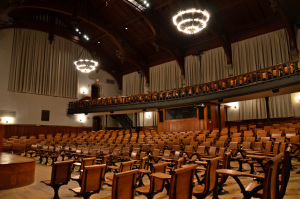
The grandest lecture hall on campus.This post was triggered after reading a few blog posts lately about how “twitter is not the same as it was a few years ago” for educators. There’s no need to mention any names, partly because it’s unnecessary and because there are actually a few blogs out there saying a similar narrative.

These blogs tell educators that Twitter is not as small as it was a few years ago when they joined . That twitter is not about learning and connecting, but rather it’s about self-promotion and self-brags. That people retweet compliments of themselves from others, or retweet their own work that people share etc etc.

View original post 646 more words

I May Have Helped Change the World

I just came back from SHAPE America’s (Society of Health and Physical Educators) Eastern District Conference. I went there with two goals. The first goal was to spread the message that anyone that teaches students needs to become connected. My second goal was to learn more. I accomplished both goals. Here is the story of my conference.

I arrived at the conference at 8:15 and met Kevin Tiller. Kevin is a physical education teacher I met on Voxer and I consider a valued member of my PLN. This was the first time we had met in person but the hello hug just came naturally.  We walked into a session that was starting and learned immediately. I went to a couple of other sessions and then headed to lunch.  When I came back from lunch I started hitting the social media infection campaign hard. I was that annoying guy who would say hello _______ (after reading your name card) and ask if they were on Twitter and Voxer.  This didn’t stop for the whole conference.  Thursday afternoon I hit up a couple of more sessions and was riding the natural physical education and health high.  I was getting people connected and having a blast. Thursday night I hit the gym up and briefly saw the comedians. The events that were scheduled had people involved and sounded like a blast. Time for bed.

Friday I woke up super early and hit the ground running. My first session was about how to infuse common core into my class. The presenter didn’t have a projector so I had him email me the presentation, dragged it into nearpod, and had the room use the code to login.  If you present a ppt to a class or as a presentation you need to use this or something similar to this. The day went on and I was learning. I ate lunch and went to my first afternoon session.

We were all sitting there when someone walked in and said it was cancelled. I immediately stood up and said I would do my Saturday session if people wanted to stay. I didn’t have a projector or a speaker but nearpod saved the day again and my session went well. People walked away understanding they need to be connected and that tech in PE and Health should be used to make our lives easier.  Friday night was fun and I couldn’t wait to present on Saturday.

Saturday morning started and I went to a Health session where I learned so much about teacher from Mary Connolly. She was presenting her book Skills-Based Health Education. Her philosophy and lessons jived perfectly with my teaching style of being active, infusing literacy skills, and group activities. I would highly recommend you attend a session of hers.

Next up was Kevin Tiller’s session. I was stoked to see my PLN in action. His session was nothing less than stellar.  I participated in games and activities that were fun and active. The best part is I didn’t know most of them.  What really wowed me was his website that he runs.  It has everything you could ever want.  He reviews apps, demonstrates dances, has FREE printable resources, and the list goes on. If you teach you have to check it out. Here are some posters for you gym that are in kid friendly language and FREE! (link) His session rocked and I was starting to get excited for mine.

The next session I went to was about finding the least common multiple of two or more numbers using body movements.  This session was run by a sophomore at Towson University name Rachel Jones. Her idea was genius. I will break it down into its most simple form. One partner needs to repeat a movement pattern to a two count.  The other partner will do body movements to a three count. The students can pick the body movement as long as they are original movements (not repeated within the sequence) and they both end their counts with the same movement. I was a two so my first movement was a squat and the second movement was standing like a pencil. My partner was a three so they had their arms above their head, than reached out across the side like a t and, the final movement was standing like a pencil. Rachel started counting. After every count we would pause and see if my partner and I where identical. This didn’t occur until the 6 count.  That is because 6 is the least common multiple of 2 and 3. If you want this clarified hit me up and I will explain it better.

Now it was time for my session. Listen to my session:  My big chance to explain to the SHAPE world why we needed to be connected and how we could use technology easily in PE and Health. It was the last session of the conference and ten people showed up.  Didn’t matter I know the power of two (thanks MANAN) which is explained here.  I had two black women who taught Health ask me if they should stay. I was so happy to see two people that were double minorities in my tech presentation because I am reading Rafranz Davis’s book The Missing Voices in EdTech. I implored them to stay and they did. I also had two University professors in my session. This meant that my message was going to reach thousands of college students if I did my job correctly.  Oh and Kevin Tiller attended as well.

I did my best to have my group realize why being connected was so important. Access to free resources and experts is a cornerstone of education.  I railed against SHAPE America charging for webinars when there are so many people offering professional development for free. The Phys Ed Summit is being offered for free!! Physical Education teachers from around the world are doing an interactive online webinar on February 21st for free!! Why has SHAPE America not endorsed and embraced this? Before I go on my tangent here the session went well and you can listen to the whole thing here.

I was relieved when the session ended and I believed it went well.  Two ladies came up to speak to me after the session.  One lady very politely asked my how could SHAPE get better. My answer to her was to stop charging for webinars. I was not rude but may have been slightly obnoxious.  During the conversation the other lady informed me that I was speaking to Dolly D. Lambdin who is the President of SHAPE America. After my initial worry that I had offended her, (she assured me I hadn’t), I gave ideas on the direction that I thought SHAPE should head towards.  Here are my thoughts about this subject.

If the mission of SHAPE is really to “to advance professional practice and promote research related to health and physical education, physical activity, dance, and sport” than we should be doing a better job of completing our mission.  Here are some of my ways to that.  The first way is to offer every resource we can find for free as well as promote it. All SHAPE has to do is find out what people are doing already and run public relations for it.  Teachers are bypassing shape and creating pd on their own for free. Use what they are creating and put it on your website.  There are GHO being recorded and posted all the time for free. This should be on the SHAPE website.  Assessments, projects, and lesson plans are being created and shared for free! SHAPE needs to tap into this and start to realize they should be in charge of collecting and posting this information.

Dolly asked me a great question that all organizations ask.  How do we raise money? This was a point where an idea that Nicholas Endlich and I fit had discussed in depth before. Members of SHAPE would run mini conferences at their school they could raise money for SHAPE. The idea is that we could run thousands of mini conferences where we would charge participants 20$.  That money would go to SHAPE.  SHAPE would provide the hosting member a 50$ gift card to Flaghouse or Gopher. The conference would consist of everyone bringing one lesson that they feel no one has ever saw before.  Every participant would be required to present and hand in a lesson plan.  Each presenter would get 15 minutes to explain their game and demonstrate it.  The audience would be active participants while they were not presenting.  It costs SHAPE nothing, the schools get great pd for their teachers for $20, the host gets $50 towards equipment.  It is a no brainer. I will tell SHAPE this now.  If you miss the boat on this idea it will start popping up on its own.  There has already been great feedback from the Physical Education community about this.

Conference review:

Things that sucked: the wifi in the hotel (needs to be researched beforehand), the lack of promotion of a twitter hashtag, the lack of promotion of free coffee in a secret room, scheduling the future leaders meetings during sessions, not recording every session and posting it, not collecting presentations and posting them online, not having people go from room to room taking pictures and posting them online, Rooms were too small for some of the sessions, Not enough people there, If this is a regional convention, where was everyone?, State conventions have way more people.

Things that rocked: The people that presented, the people that attended, the people that planned the conference, the college students that came and participated, getting connected with people, learning more about Health and PE, nice to be able to stay at hotel where convention was.

Q1: Why are you or aren’t you a part of your state and national organization? #slowchatpe

Q2: What does your professional organization do well? #slowchatpe

Q3: How can your professional organization get better? #slowchatpe

Q4: What do you do to make your profession better? #slowchatpe

Q5: What is the best conference you ever attended and why? #slowchatpe

Share the Land (Guess Who)

This post is going to challenge my ability to stay positive and not throw shade at other teachers. I don’t believe that teachers should create lesson plans and sell them to other teachers. This is something that makes me so mad when I hear about it happening. Teachers should share their lesson plans for free. We are a profession where I truly believe creation is rarely if ever truly original. In addition, we all are in it for the same reason, to make a positive change in students’ lives. Selling our lesson plans runs counter intuitive to that goal.

I am not a hypocrite. (in this case)  I am part of a physical education and health group that has about 40 people who have shared their lesson plans. I have included my plans in that shared folder as well.  If anyone needs physical education or health plans I will be happy to share them with you. I have created global projects with @nicholasendlich and @mradampe that we have shared with the world for free. We are also working on another groundbreaking project that will help physical education teachers introduce and teach bodyweight exercises to their students.  We will be sharing this as well for free.

Here are some of the reasons that I believe selling lesson plans are wrong. The first reason is that we are in the profession of sharing and collaborating. Selling lesson plans goes against this. It creates roadblocks for teachers and the last thing we need is our own professionals making our jobs more difficult.  The second reason is that if you create lesson plans for your job they belong to your district and not you. For example my physical education plans are really owned by my district. “Works made for hire (a work “made for hire” by an employee and certain kinds of commissioned works) are considered to be authored by the employer or the commissioning party. So if your boss asks you to write a report as part of your job, the company you work for gets all the copyright protection that would otherwise have been available to you.”  (http://goo.gl/6B6rw0)  If you don’t believe me read this NEA article that cites instances where districts have actually sued teachers who have sold their teaching materials and won! (http://www.nea.org/home/37583.htm)

Another common reason people give is that purchasing lesson plans saves the teacher’s time from having to create their own.  We all know that time is money so in actuality teachers are saving time and money by purchasing the lesson plans.  This is a great argument if you rule out the fact that these plans should be posted for free and should cost the teachers nothing!  This would save teachers even more time and money.

Teachers are all scraping by in life. I work four different jobs during the year to make ends meet. My family does not heave wealth nor taste. (hope you understood the reference) I have three children and two dogs.  My student loans are mounting and my cars always need fixing. I get what it is like to be poor and struggling. This still does not excuse the fact that selling lesson plans to other broke teachers does not advance our profession. Educators should support other educators and selling our ideas hinders not helps our profession.

slowchatpe

Q1: Why do you believe ts should or shouldn’t sell their lesson plans? #slowchatpe

Q2: Where are the best sources to find free lesson plans? #slowchatpe

Q3: What do you create that you share with the world? Where can we find it? #slowchatpe

Q4: How do you make extra money or cut costs to make ends meet? #slowchatpe

Q5: What people are creating free educational tools that people should follow or know about? #slowchatpe

The Dark Side of the PLN

This post surprised me. It surprised me because it involves feelings and I am not the most sensitive person in the world. (just ask Pernille Ripp or Rafranz Davis) Let’s talk about the dark side of the PLN. We hear all the time how great they are. Well I am here to talk to you about the flip side. The side that people don’t discuss. The part of the PLN that makes you feel alone and inadequate.

Your PLN should be made up of the greatest people you can find. I know mine definitely is.  My PLN consists of people that create apps, create websites, create global projects, create backpacks with activities for students to do at home, know more about technology than so called “experts”, teachers of the year, authors, and the list goes on. I want the best and brightest at my fingertips to lead me to become the greatest teacher I can be. I found those people and continue to find more and learn every day.

There is a downside to this though. The part of you that lambasts yourself because you haven’t wrote that book yet, participated in that global project, achieved that award, or created that groundbreaking activity. Let me make this clear I am not hating on what other people have done. It is a feeling of jealousy and inadequacy of what I haven’t done yet. I do not want what those people have. I want to do what those people are doing.

One example of this is my physical education Voxer group. I have the best minds in the physical education world sharing what they are doing. Their ideas have helped pushed me to be a much better teacher than I ever would have alone. They also made me realize how much more I could and should be doing in my class. Another example of this are the multiple authors I have in my PLN. I want to write a book and it makes me feel like I am not doing enough because I am doing nothing to accomplish this goal. A third example is how some of my PLN uses solo taxonomy to take their teaching to the next level.   This seems to be an awesome way to let students control their learning. I want to be doing this.

After much reflection I have come to this conclusion.  I cannot look at what other people are doing (or have done) and compare myself to them. I need to use them as the springboard to get ahead. My time is precious. I have to prioritize and figure out what do I want and how can I accomplish it. My PLN is there to propel me forward. When I am ready to write my book I will have multiple people who can shine a light on the best way to accomplish this. When I am ready to tackle solo taxonomy there is a Voxer group that will help me figure it out.

If my PLN was not so wonderful than what would I aspire to? Do I want to be the top dog who knows everything and has done everything? No way who would assist me, push me, or inspire me? So if anyone else ever feels that they aren’t doing enough, don’t know enough, don’t have enough time or just plain feels inadequate remember that your PLN is there to show you what is out there not to make you feel like you haven’t done enough.

Q1 How do you keep from comparing yourself to others in your PLN? #slowchatpe

Q2 What has someone in your PLN done that you want to do? #slowchatpe

Q3 What specifically does your PLN do to make you better? #slowchatpe

Q4 Who is the greatest person in your PLN and why? #slowchatpe

Q5 What do you contribute to a PLN? #slowchatpe

RECORDING STUDENT DATA

collecting student data blog

This week #slowchatpe is being moderated by @NicholasEndlich. This is a man who not only knows technology he implements it!!!

3 years ago my district made some building changes that moved me from teaching K-4th grade to teaching K-6th grade.  This wasn’t a huge deal except for the fact that for the first time in 7 years I would have to formally assess/grade students.

The first year was really rough!  Although 2 other physical education teachers in my district had taught these grade levels previously we didn’t have any time to meet, collaborate or discuss units, resources or assessments.  And like an infant trying to walk, I failed and failed often, sometimes falling right on my face.

At the time I was relatively involved with #pechat and connecting with other #physed teachers through Twitter.  It was through these interactions and learning that I was able to start to transform the way I collected student data.

In my first year I had students using HR monitors during class and recording their heart rates via paper and pencil.  I would then have to go in on a daily/weekly basis and enter the student data into a spreadsheet in order to calculate their average heart rate over the course of a semester.  Their average heart rate was used as one form of assessment for their overall grade.  The problem came when I couldn’t keep up with the data entry and became VERY overwhelmed. 

The other issue was that I was only using this data for grading purposes, which was ok because I needed to provide evidence of student achievement.  However, I wanted to see how active my students were during specific lessons.  This would provide me with some data about the lessons I was planning and how active they made the students.

As I re-evaluated my practices I realized that I needed to do more with the data I collect.  I also needed to collect more data.  This is were my love affair with Google Forms and QR codes began!  I am fortunate enough to have access to a classroom set of iPods.  Last year I began collecting student data in a variety of forms for multiple uses.

First I collect student data as a means of assessment.  On a daily basis students are using HR monitors and/or pedometers to measure student activity level during class.  Each class has its own Google Form with the add-on Doc Appender running on it.  Doc Appender is linked to a Google Doc that the students wrote their personal fitness goals on at the beginning of the year.  The way Doc Appender works is that every time a students submits a response through the designated Google Form it automatically updates their Fitness Goal Doc as represented by the table below.  I have it set to Append the Time stamp and number of steps taken in a horizontal table.

Doc Appender. FitnessGoals

By combining Google Forms and Google Classroom I can seamlessly push out the assignment to my students at the beginning of the year and use that same document to track not only their pedometer steps and heart rates, but any other assessment.

So what data am I collecting and what do I do with it?  As mentioned, I daily collect pedometer steps and/or heart rates.  I love to use Google Forms as Exit Tickets during units to check students understanding of key concepts and skills.  I use this information to plan future lessons.  For example, this year I introduced Tchouckball to my 6th grade students, but when I had them complete an exit ticket the data showed me that the students weren’t understanding the skills necessary to “get open in space.”  My next lesson then focused on moving without the ball, faking, cutting, and give-and-go activities.  The summary of responses from a Google Form will break down the percentage of students who answered a particular question a certain way.  This is a very quick way to check the understanding of your students and make adjustments to your lessons.

The other way I utilize Google Forms is to take student surveys.  Each year I ask my students to complete a survey in which they get to rank various units that we “may” participate in during the school year.  As I plan the units I use this data to determine what activities to teach.  I will also use this information to provide various activities that the students can choose from.

As I move forward and continue to try to improve my instruction and assessment I try to ask myself several questions.

1.  What types of student data do you collect?

2.  How do you determine what types of assessments/data to collect?  Teacher Assessment? Peer Assessment? Self Assessment? Exit Tickets? Student Surveys?

3.  How do you collect data and/or administer the assessment? Individual? Partner? Whole Class? Written? Digital?

4.  How do you use Student Data?  Assessment/Grades?  Provide data driven instruction? Student Understanding? Lesson Planning?

5.  What are your favorite tools/apps/websites for collecting Student Data?

“The Elephant Speaks”

IMG_1338Slowchatpe is being guest moderated by the great Lynn Burrows this week!! Here is her blog copied from: http://lovepe.me/2015/01/11/the-elephant-speaks/

Recently I was part of a conversation in which physical education teachers were discussing how much time students spend in physical education as required by their districts. Predictably the conversation went on to discuss the importance and benefits of quality physical education, which each of the professionals believe, as I do, is a daily necessity in the lives of all students. However, there was a giant elephant in the room (it was an online chat, so I’m hoping that metaphor might still apply.) The identity of the elephant? Could one very real factor leading to students not receiving daily physical education be the lack of consistency in the quality of product delivered?

When I think of a consistently great product I generally think of Starbucks’ Americano coffee. No matter where I go, local or across the world, when I order an Americano, it is great. Similar to the thousands of Starbucks chains across the world, there are innumerable outstanding P.E. teachers across the world. These industrious, caring educators make me proud to part of this profession. Like Starbucks, these teachers are delivering a quality product to each student, every day of the year. This high standard we all strive to achieve, but what about when a physical education program is lacking quality? “Ouch”, the elephant speaks.

“Ouch” is the feeling I get when introduced as a P.E. teacher and I get “Oh I love gym, I was the best at dodgeball”, or “I hated gym, all we did was run laps.”

I’d like my comeback to be, “Believe me, I don’t care much for Jim or the atrocities he induced either!”

My actual reply is always about how I absolutely love my job as a physical educator. I then go on to tell whomever will listen about how much physical education has changed (e.g. cooperative learning, differentiated learning, life time skills, fun, child centered learning, content infused games.) But recently I have been having this conversation with older teens, young adults. Wait a minute, shouldn’t they have experienced the “New P.E.?”

Q1: What role does lack of quality play when it comes to districts or states requiring daily physical education? #slowchatpe

Q2: What are we doing to make a difference in the quality disparity? #slowchatpe

Q3: How can we be part of the change necessary so students do receive a great product, no matter where they attend school? #slowchatpe

Q4: How do we approach and inspire others in our profession who might be using questionable practices? #slowchatpe

Q5: What are you doing to help change the ts that you work with who have taught the “old” way? #slowchatpe

Help me, Help me

Definition of Resolution: something people make on January 1 and don’t follow through on. Let me go back a step. I am a professional hater. When I see people tweeting out their new year’s resolutions and one word motto that they are going to live by this year I automatically think that failure is waiting to jump out of the shadows to feast on a tasty snack. It will slowly stalk its prey and gently lull it to sleep. Before you know it it is has captured your resolutions without you even realizing until it is too late. You want to cut out chocolate? You will eat a candy bar without even remembering your resolution until you get half way through. Failure wins again! You resolve to stop cursing? That car cut you off and without thinking you let out an utterance that would make your momma slap you in the face and send you to your room without dinner. Failure took your resolution and sold it to letdown for a Zimbabwe Kwacha. Decided to quit smoking cigarettes? Your boss yells at you for something your stupid coworker did and you just need to get out of the office for a break to “relax”. Failure smirks as it easily snatches your resolution and mails it to the devil for a cheap laugh.

That is why this year I have a plan to trick failure! My first step was to make my resolution on September 1 instead of January 1. Yes I agree with you that is brilliant. The New Year’s Resolution Killer didn’t even see it coming! Step two was to make the resolution attainable. Matter of fact it was so attainable that I already completed it before the New Year! Step 3 is to extend the resolution and go public with it. Why go public? So failure would meet its arch nemeses support and awareness! Step 4 triumph over failure by yelling out to the world that I won! I have defeated failure!

Ok that was the longest intro ever. Sometimes I like to hear myself type! Let me explain. On September 30 my mother in law asked our family if we would like to start a 60 day challenge. It was simple. Exercise EVERY day for at least 20 minutes a day.  Some days I would play basketball for two hours while other days I would walk on the treadmill at midnight drinking liquids. (to make sure I was hydrated) It didn’t matter what we did all that mattered was that we exercised for 20 minutes that day. We would text each other as soon as we got done so we could support each other.  My mother in law and I made it all the way to the New Year without skipping a day! It was a brilliant accomplishment that made me want to go further.

Now this is where I need your help. I want to continue this until the greatest day of the year March 8.  I am begging, imploring, asking, appealing, calling, demanding, desiring, entreating, inviting, soliciting and every other synonym you can think of for you to join me. This will help hold me accountable if even one other person joins me on this journey. Whenever you read this blog tweet me @schleiderjustin and post to the hashtag #20minpe every day when you complete your exercise. It doesn’t have to be fancy. It could be walking the dog, walking on the treadmill while listening to a podcast, shoveling snow or any activity that made you active for at least 20 min that day.

I am ready to snatch success from the jaws of failure. So please people if you read this help me become a winner. Make me accountable on a grand public scale. I want to be so scared to let people down that I wake up every day saying I have to get my 20 in today. Who is ready to take on the stealthy assassin known as the New Year’s Resolution Killer with me?

Q1: How do you show stakeholders that we personally value exercise? #slowchatpe

Q2: What do you do to encourage other stakeholders to exercise? #slowchatpe

Q3: Should physical education teachers be physically fit barring medical reasons? Why? #slowchatpe

Q4: Do you ever exercise in front of stakeholders? What does this look like? #slowchatpe

Q5: How can technology assist stakeholders in exercise? #slowchatpe

Creation Connection and Collaboration

Social Media has overtaken my life. I wake up and participate in Voxer discussions. I moderate a Twitter chat (#slowchatpe) where I post one question a day about various education subjects. My students use kidblog to push their voices out to the world.  I also run a wordpress blog that gives the background for the questions of the week. There are lessons of mine on education skype where teachers from all over the world can connect with my class and my lessons.  These all push my teaching and professional development to the next level.

This is all well and great but it is not enough. It is a lot of talk and reflection. Talk is cheap and reflection only matters if you do something with your new-found enlightenment. I want next level. That level is collaborating and creating new projects.  The greatest example of this occurred in the @voxer physical education and health teacher group last week.  One teacher (@NicholasEndlich) threw out an idea he had using rock, paper, scissors as a game in physical education.  Within 5 minutes there were 15 voxes (voice posts) giving him other ideas using the rock, paper, scissors theme.  That right there is a pretty cool concept. A ton of teachers bouncing ideas off each other to come up with something new.  The story gets better though. Twenty minutes later Nick showed pics of his students playing the new games he had just learned!! That is mind blowing!! No more of going to conferences and waiting to implement new materials. The new pd uses social media and can be used immediately. That is the future of education.

Another great example of creation and collaboration is the project that @nicholasendlich,@mradampe, and I created.  The project is entitled #soyouthinkyoucanbalance.  Follow this link to start the project. The best part of this project is that we used students to create the balances and social media to plan how this was going to work.  The combination of twitter, voxer, and google hangouts can not be beat. We talked about it on voxer and then went in depth on a Google Hangout.  This allowed us to come up with the plan and how we wanted it executed. Voxer allowed us to keep the project moving because voice messages are so much more efficient than phone calls or twitter.  Twitter was the way we were able to push out the finished project.  So far students in the US, Saudi Arabia, the UK and Vietnam have participated in this.

This week I want us to think how can we stop talking about education and start collaborating and creating. We start out on social media lurking, then move on to participating, some go on to moderate different social media groups.  That is not enough! How can we continue to grow by creating, collaborating, and connecting ourselves and our students?  Let’s stop talking and start doing!

Q1: How have you used social media to create something? #slowchatpe

Q2: What different social media platforms have u smashed together to use the 4 C’s? #slowchatpe

Q3: When was the last time u implemented a new idea you saw on sm? How long between learning and implementing did it take u? #slowchatpe

Q4: Does your state/district give pd hours for sm? How does that work? #slowchatpe

Q5: What do people need to know about social media that they don’t know already?

How are minorities affected in education?

How are minorities affected in education?  I have to be honest I don’t know much about how being a minority affects education.  I am a white Jewish male who was raised by two white teachers in a middle class white neighborhood. My middle and high school was a mix of various different races but I did not have many minority friends.  I played multiple sports and hung out with a variety of people but I don’t have the faintest clue how race or gender could affect a person.  I went to Rowan University where I had more minority friends but the subject of being a minority was never discussed.  I am trying to learn more about this subject by creating a @Voxer group with the author of the book, Missing Voices in Edtech, Rafranz Davis.  This book club will allow me to get an insight into the problems that minorities have within the education world. If you want to join tweet me! (@schleiderjustin) Help me discuss minorities in education this week at #slowchatpe.

When researching minorities in education I came across this article that was written in 1998: “Recent analyses of data prepared for school finance cases in Alabama, New Jersey, New York, Louisiana, and Texas have found that on every tangible measure—from qualified teachers to curriculum offerings—schools serving greater numbers of students of color had significantly fewer resources than schools serving mostly white students.” source That was 15 years ago though. Things definitely had to have changed though.  Right?

I went back to Google and found an article that was released over 15 years later.  “Racial minorities are more likely than white students to be suspended from school, to have less access to rigorous math and science classes, and to be taught by lower-paid teachers with less experience, according to comprehensive data released Friday by theDepartment of Education’s Office for Civil Rights.source  It seems that things have not changed a lot over the last 20 years.

When I think of minorities in education I think of skin color.  Gender inequality is also a problem in education.  “Last year, girls made up 18.5 percent of A.P. computer science test-takers nationwide, a slight decrease from the year before. In three states, no girls took the test at all. An abysmal 0.4 percent of girls entering college intend to major in computer science. And in 2013, women made up 14 percent of all computer science graduates — down from 36 percent in 1984.” source  This is a huge problem.  If we do not have diversity in a field then we are lacking in diverse perspectives that are needed to solve the various problems and changes that occur.

I am a firm believer that identifying the problem is only the first step in solving the problem. It is not enough to simply state that there is a problem.  I want to change the problem.  That change starts with us. How can we make sure that minorities are able to succeed in education? That will be the crux of a difficult conversation that I will attempt to tackle this week.

Q1: Do you treat both genders the same?  How do you know? #slowchatpe

Q2: Is race the bigger problem or is it SES? #slowchatpe

Q3: How do you address race in your class? #slowchatpe

Q4: What did you do to discuss the recent events in NYC and Missouri?

Q5: Do you engage in code switching with your students? Is this a positive or negative thing? http://www.learnnc.org/lp/pages/4558